
Leftist news media outlets in the United States and around the world have rushed to accuse Donald Trump of “starting a war” with Iran. The charge is repeated so often that many assume it must be true. Yet the claim collapses the moment one looks at the historical record. Did Trump start a war with Iran? No. He did not start a war. He is finishing one that Iran started nearly half a century ago.
Some regimes are so evil and deceitful that diplomacy is fruitless. Adolf Hitler is one example. Neville Chamberlain believed he could negotiate peace with Nazi Germany. All he accomplished was giving the Nazis time to grow stronger. The only way to end the Nazi regime was through overwhelming military force. Sometimes the only path to peace leads through war.
Such is the case with the Iranian Islamic regime. For decades it has funded terrorism, threatened its neighbors, and openly called for the destruction of Israel and America. A regime built on hatred and expansion cannot be reasoned with forever. At some point it must be stopped. Just as the Nazi regime had to be defeated, the Iranian regime must be brought to an end.
The conflict between the United States and the Iranian regime did not begin with Trump. The war with Iran began in 1979 when the Islamic revolutionaries seized power and declared open hostility toward America. To understand the present confrontation, one must start where the hostility actually began. The Islamic Republic has spent more than four decades attacking Americans, destabilizing the Middle East, threatening Israel, and spreading terror through proxies. When that record is honestly examined, the question changes. The real issue is not whether Trump started a war, but whether the United States has been under attack by Iran for decades.
The War Began in 1979
The conflict began with the Iran Hostage Crisis. In November 1979, militant supporters of the revolutionary regime stormed the United States Embassy in Tehran and seized American diplomats. Fifty-two Americans were held captive for 444 days while the regime publicly humiliated the United States. The new ruler of Iran, Ayatollah Ruhollah Khomeini, openly endorsed the takeover. The regime used the hostages as political leverage while crowds chanted “Death to America” in the streets. This was an act of war carried out by a revolutionary government that defined itself in opposition to the United States.
Only when Ronald Reagan was elected president did Iran finally release the hostages, and even then it was because the regime feared the consequences of refusing. Iran’s leaders knew Reagan would not tolerate the continued humiliation of the United States. The hostages were released, and America chose restraint. For the sake of peace, we let the regime off the hook.
Decades of Attacks on Americans
Make no mistake. From the very beginning, hostility toward America was not an accident of Iranian policy. It was one of the regime’s founding principles. The leaders of the Islamic Republic built their legitimacy on defiance of the West and the promise of exporting their revolution beyond Iran’s borders. When the hostage crisis ended, the aggression did not stop. It evolved into a long campaign of proxy warfare and terrorism directed against American forces and our allies.
In 1983, a suicide bomber linked to Hezbollah attacked the U.S. Marine barracks in Beirut, killing 241 American servicemen. Hezbollah itself was created, trained, and funded by Iran’s Islamic Revolutionary Guard Corps. The attack was one of the deadliest terrorist strikes against Americans prior to September 11. What did the United States do to make Iran pay for this atrocity? Nothing. There was no retaliation against Iran for the murder of 241 American servicemen. Instead, the United States withdrew its Marines from Lebanon the following year, leaving Iran’s terrorist proxy unpunished and signaling to the regime that America lacked the will to respond.
Iran continued this pattern in later decades. During the Iraq War, Iranian-backed militias supplied explosively formed penetrators and other weapons that killed and maimed American soldiers. U.S. officials repeatedly traced these weapons and training programs back to Tehran. Iran has also directed numerous proxy attacks on American bases and personnel throughout the Middle East. These attacks are typically carried out by militias that Iran funds, trains, and arms. By using proxies, the regime strikes American targets while attempting to avoid direct retaliation. Even though we knew Iran was behind these attacks, the United States did not strike Iran in response. The regime learned an important lesson from this: it could attack Americans through proxies and pay little price for doing so.
U.S. authorities have uncovered multiple Iranian assassination plots targeting President Donald Trump and other American officials. Federal prosecutors say operatives linked to Iran’s Islamic Revolutionary Guard Corps attempted to hire criminals to carry out the killings and conduct surveillance of U.S. targets. Justice Department indictments describe efforts to recruit hitmen for attacks on American soil. Iranian officials and commanders have also publicly called for Trump’s death, making clear these were not isolated threats but actions tied to the regime itself. Attempting to assassinate an American president is an act of war. Yet even after this, the United States did not invade Iran.
War Against Israel and Regional Destabilization
The Iranian regime has not limited its aggression to the United States. One of its most consistent goals has been the destruction of Israel. Iran finances and arms groups such as Hezbollah and Hamas. These organizations have launched thousands of rockets and missiles at Israeli cities over the years. Iranian leaders have repeatedly called for Israel to be wiped off the map.
Beyond Israel, Iran has worked to destabilize much of the Middle East. It has supported militias in Iraq, propped up the Assad regime in Syria, armed rebels in Yemen, and exerted heavy influence over politics in Lebanon. In each case, Iran’s goal has been to expand its revolutionary ideology and regional power. This pattern shows that the Islamic Republic does not behave like a normal nation-state focused on peaceful development. Its leadership has consistently pursued a strategy of expansion through proxies, militias, and armed movements.
Iranian proxies such as Hamas have also waged a propaganda war designed to manipulate public opinion in the West. Civilian suffering is repeatedly used as a weapon in the information battle. Emotional images and dramatic claims are circulated through sympathetic media outlets before the facts can be verified. These stories are then used to mobilize protests and pressure governments, often turning uninformed people into what Lenin once called “useful idiots” who unknowingly advance the goals of hostile regimes.
A clear example occurred when a United Nations official claimed during a BBC interview that 14,000 babies in Gaza could die within 48 hours if aid did not immediately arrive. The shocking claim spread rapidly across the world’s media and was repeated by politicians and activists as proof that Israel was committing mass starvation. The story soon collapsed. The United Nations later clarified that the number actually referred to children who might suffer malnutrition over the course of an entire year, not babies expected to die within two days. By the time the correction appeared, the false claim had already spread across the world and shaped public opinion.
There have also been cases where images used to portray starvation were staged. Investigations revealed photographers directing children to appear before cameras holding empty bowls and pots for dramatic photographs rather than documenting actual food lines. These images were broadcast around the world and presented as proof of deliberate starvation. The result was a powerful emotional narrative that influenced global opinion even though the scenes themselves had been staged for the camera.
This propaganda campaign is not accidental. Hamas is an Iranian-backed organization funded and armed by the Iranian regime. The information war it wages is part of the larger conflict Iran has been prosecuting against Israel and the United States for nearly half a century. By spreading false or exaggerated stories of civilian suffering, these groups inflame anger against Israel and fuel antisemitism around the world. Sadly, that strategy has been rather successful, as anti-Jewish hatred has surged in many countries during the conflict. In this way propaganda becomes another weapon in the long war Iran has been waging for forty-seven years, using terror, proxies, nuclear ambitions, and now information warfare to attack Israel and its allies.
Why Iran Cannot Have a Nuclear Weapon
One of the most dangerous aspects of the Iranian regime is its pursuit of nuclear capabilities. Iranian leaders have combined radical ideology with missile development and uranium enrichment programs with the goal of creating nuclear weapons. If Iran were to obtain nuclear weapons, the consequences could be catastrophic. The regime already sponsors armed proxies across the Middle East. A nuclear umbrella could embolden those groups and deter retaliation against Iranian-backed attacks.
A nuclear-armed Iran could also trigger a regional arms race. Countries such as Saudi Arabia and Turkey would likely seek their own nuclear capabilities in response. The result could be a far more dangerous and unstable Middle East. Iran is led by religious extremists whose eschatology includes the belief that chaos and conflict will help usher in their awaited Mahdi.
They have repeatedly vowed to destroy Israel and America, and crowds regularly chant “Death to Israel” and “Death to America.” Their leaders speak openly of spreading their revolution across the world. A regime driven by this kind of “death cult” ideology can never be allowed to possess nuclear weapons. For these reasons, preventing Iran from obtaining nuclear weapons has become a central concern for many nations. The issue is not merely a regional dispute. It involves global security.
Iran’s Drones and the War in Ukraine
Iran’s influence now reaches far beyond the Middle East. In recent years the regime has supplied Russia with attack drones and the technology to build them. Many of the drones Russia launches against Ukraine are Iranian-designed Shahed drones. These weapons are used to strike Ukrainian cities, power plants, and residential areas. In effect, Iran has become a key supplier of the weapons Russia uses to terrorize the Ukrainian population.
Disrupting Iran’s drone production therefore has consequences that extend beyond the Middle East. Weakening that supply chain could directly affect Russia’s ability to continue its attacks against Ukraine. In this way, confronting Iranian military production is not only about regional security. It also intersects with one of the largest conflicts in Europe since World War II.
The Iranian People and the Regime
One of the most important distinctions in this conflict is the difference between the Iranian regime and the Iranian people. The government in Tehran does not represent the will of most Iranians. Independent polling has shown overwhelming opposition to the clerical regime. A large survey conducted by the Group for Analyzing and Measuring Attitudes in Iran (GAMAAN), involving tens of thousands of respondents inside Iran, found that about 81 percent of Iranians said they do not want the Islamic Republic to continue. In other words, roughly four out of five Iranians oppose the system that has ruled them since 1979.
This anger has repeatedly erupted into nationwide protests. Major uprisings occurred in 2009, 2019, and again in 2022, with millions of Iranians demonstrating against corruption, repression, and economic collapse. Many protests began when citizens complained about soaring prices, food shortages, and a collapsing economy while the regime spent billions supporting foreign militias and wars abroad.
Protesters openly chanted against the supreme leader and demanded the end of clerical rule. The regime responded with brutal force. Security forces fired on demonstrators in the streets, killing large numbers of civilians. Human rights groups report that wounded protesters were tracked down in hospitals where many were arrested or killed. Women detained during these crackdowns have reported rape and other forms of sexual torture before being killed or disappearing into the prison system. Tens of thousands of innocent Iranian civilians have been killed by their own government in its effort to crush dissent.
Brutality to Women
The regime’s oppression is especially severe toward women. Under the Islamic Republic, women are legally treated as second-class citizens. They are forced by law to wear the hijab in public and are policed by morality patrols that arrest women whose clothing they consider improper. Women face restrictions on travel and in many cases cannot obtain passports or leave the country without permission from a husband or male guardian. Their rights in marriage, divorce, and child custody are sharply limited, and in court a woman’s testimony counts as only half that of a man. Women also face discrimination in employment and education. Under Iran’s clerical regime, the law allows young girls to be forced into marriage at shockingly young ages. Girls as young as ten can be compelled to marry against their will. Under Iran’s Islamic legal system, a woman who is raped often cannot prove the crime because the courts may require multiple male witnesses, meaning the attacker frequently goes free while the victim risks punishment for “immorality” if she cannot prove her claim.
Authorities have restricted women from entering certain university programs and fields of study, and government policies have periodically attempted to reduce the number of women admitted to universities. In the workplace, employers are allowed to discriminate based on gender, and women may be barred from some professions or dismissed if a husband objects to their employment. Women who protest these restrictions or refuse to comply with the mandatory dress code can be arrested, beaten, imprisoned, or worse. The death of Mahsa Amini in 2022 after being detained by morality police sparked nationwide protests and drew global attention to the regime’s treatment of women.
Many Iranians openly hope for the end of the system that has ruled them since the revolution. In recent days videos circulating online have shown Iranians dancing in the streets and expressing gratitude toward the United States and Israel for striking the regime. These scenes reflect the deep anger many ordinary Iranians feel toward the clerical rulers who have oppressed them for more than four decades.
Persecution of Christians
For decades the suffering of the Iranian people has largely been ignored by the international community. The same regime that shoots protesters, imprisons dissidents, and brutalizes women has been treated by global institutions as if it were a normal government. Iran has maintained representation at the United Nations and has even held positions on various UN bodies despite its record of repression and violence. Critics have repeatedly pointed out the contradiction of allowing a regime accused of severe human-rights abuses to sit on panels discussing democracy, social development, and women’s rights. At one point Iran was even elected to a UN commission dealing with the status of women before international outrage forced its removal in 2022.
Meanwhile, the cries of the Iranian people went largely unanswered. Protesters were shot in the streets, thousands were arrested, and human rights investigators have concluded that the government’s crackdown involved murder, torture, and sexual violence that may amount to crimes against humanity. Yet year after year the regime continued to be treated diplomatically as a legitimate government while ordinary Iranians suffered under its rule. For many Iranians, the world seemed willing to condemn abuses in speeches while doing little to stop them. Only recently has that long silence begun to break, as President Donald Trump has taken direct action against the regime, confronting it with the kind of pressure the international community refused to apply for decades.
Iran Was on the Brink of Nuclear Weapons
Iran’s nuclear program was already dangerously close to the finish line. International nuclear inspectors reported that Iran had enriched uranium to about 60 percent purity, a level that is only a short step away from weapons-grade. Analysts warned that once enrichment reaches this stage, the final jump to 90 percent can be done very quickly.
Iran had also accumulated a massive stockpile of enriched uranium. Experts reported that the regime possessed enough material that, if further enriched, could fuel roughly ten to eleven nuclear weapons. Some estimates indicated that Iran’s breakout time to produce weapons-grade uranium for multiple bombs had shrunk to only weeks.
In other words, the world was not dealing with a distant possibility. Iran was already on the threshold. Without the strikes carried out by Israel and backed by President Donald Trump’s policy of confronting the regime, those facilities would have continued operating. At the rate the program was advancing, Iran was only weeks away from having the material needed to build nuclear weapons.
Why Israel Acted and Why the United States Joined
Israel knew Iran was racing toward a nuclear weapon. Intelligence showed enrichment and weapons work moving forward quickly. Iran’s leaders openly call for Israel’s destruction, and Israeli officials were not willing to wait until the regime actually had the bomb. Facing the prospect of a nuclear-armed enemy sworn to wipe them off the map, Israel made the decision to strike Iran’s nuclear facilities before the program could be completed.
Israel informed the United States of its decision. American leaders had to face a simple reality. Iran has repeatedly threatened to attack U.S. forces throughout the Middle East if Israel struck its nuclear facilities. Iran calls Israel “the little Satan” and America “the big Satan.” In their eyes, an Israeli attack is the same as an American attack. Thousands of U.S. troops are stationed at bases across the region within range of Iran’s missiles and drones. U.S. officials, including Secretary of State Marco Rubio, made it clear they expected Iran would retaliate against American positions once Israel struck.
President Donald Trump therefore made the decision to assist Israel in degrading Iran’s military capabilities as quickly as possible. The goal was not simply to destroy nuclear infrastructure but also to reduce Iran’s ability to launch missiles and large scale retaliation against U.S. forces. By striking missile sites and related military assets early in the conflict, the United States aimed to limit Iran’s capacity to hit American bases and personnel. The objective was straightforward. If Iran was going to respond to Israel’s strike, the United States wanted Iran’s ability to do so severely weakened in advance, thereby saving American lives.
Trump Gave Iran Every Opportunity to Avoid War
Before any military action was taken, President Donald Trump repeatedly attempted to resolve the crisis through diplomacy. His administration entered negotiations with Iran and publicly expressed willingness to reach an agreement if Tehran would abandon its nuclear weapons ambitions. Talks were held through intermediaries and in international forums, and the White House made clear that a deal was possible if Iran would dismantle its nuclear and missile programs.
Even as tensions escalated, Trump continued to give diplomacy a chance. He issued clear warnings that Iran had a limited window to reach an agreement and urged its leaders to come to the negotiating table before military action became unavoidable. At one point he gave Iran a deadline of about ten days to make a deal, warning that failure to do so would lead to serious consequences.
Instead of negotiating in good faith, the Iranian regime stalled and refused to abandon its core demands. Iranian officials insisted they would continue their nuclear activities while still claiming to be willing to “talk.” Negotiations dragged on through multiple rounds without meaningful progress, and by late February the talks remained far apart on the fundamental issue of Iran’s nuclear program.
In the end, diplomacy failed because Tehran would not change course. While claiming to negotiate, the regime continued advancing its nuclear capabilities and rejecting the conditions necessary for a real agreement. Only after those efforts collapsed did military action occur.
The Good That Could Come
If the Iranian regime’s military and nuclear capabilities are truly dismantled, the benefits could be enormous. The most immediate result would be the avoidance of a nuclear disaster. Iran was already close to the threshold of nuclear weapons capability. Removing that threat eliminates the possibility that one of the world’s most radical regimes could soon possess atomic weapons capable of devastating entire cities.
Another possible outcome is freedom for the Iranian people. For decades they have lived under a brutal clerical dictatorship that suppresses dissent, jails political opponents, and imposes severe restrictions on everyday life. Large numbers of Iranians have already shown their desire for change through repeated nationwide protests. If the regime’s grip on power weakens, it could open the door for a new government that represents the will of the Iranian people rather than the rule of a small group of religious extremists.
The security of the Middle East could also be dramatically improved. Much of the instability in the region over the past forty years has been fueled by Iran’s support for militant groups and proxy forces. Weakening the regime’s ability to fund and arm these organizations could reduce violence across Lebanon, Syria, Iraq, and Yemen. Israel, which has lived under constant threat from Iranian-backed groups, would gain a measure of security it has never known in the modern era.
The United States would benefit as well. American troops and bases throughout the region have been frequent targets of Iranian-backed militias. Destroying missile systems, drone facilities, and military infrastructure reduces the regime’s ability to threaten American personnel and interests.
There are also global implications. Iran has been supplying large numbers of attack drones to Russia, which have been used to strike Ukrainian cities and civilian infrastructure. Disrupting Iran’s ability to manufacture and export these drones could significantly weaken Russia’s ability to wage war against Ukraine.
Finally, removing the nuclear threat from Iran would send a powerful message to other regimes that seek to intimidate the world through weapons of mass destruction. It would demonstrate that the international community will not allow extremist governments to develop nuclear arsenals while openly threatening their neighbors and sponsoring terrorism across the globe.
Conclusion
Donald Trump did not start this war. Iran did when the revolutionary regime seized American hostages in 1979 and declared its hatred for the United States and Israel. For forty-seven years the regime has funded terrorism, attacked American forces, threatened Israel, and worked relentlessly to obtain nuclear weapons. The conflict now unfolding is not the beginning of a war. It is the end of one that Iran started decades ago. Finally, America is taking action, something that should have been done long ago. Payback is long overdue. The freedom of Iran may finally be at hand. Peace in the Middle East may finally be possible, thanks to Israel and President Trump.
President Trump has long pursued what he calls peace through strength. During his leadership he has helped end conflicts through diplomacy and pressure, bringing adversaries to the table and defusing dangerous situations without war. Iran was different. The regime refused to abandon its nuclear program, rejected meaningful negotiations, and continued threatening its neighbors. In this case, stopping the threat required military force.
Israel and the United States have struck at the heart of the regime’s power. Many of its senior military leaders have been killed. Its navy has been destroyed. Key missile and nuclear facilities have been hit. Israeli and American aircraft now dominate the skies over Iran. The regime that once threatened the region with missiles, proxies, and nuclear ambitions has been badly crippled.
Trump did not start this war. He is bringing it to an end. The regime that began this conflict forty-seven years ago is now facing the consequences of its own aggression. If the outcome holds, the world may soon see the end of the war Iran started in 1979.

If you like this article, you would love my book!
The Israel of God: A Christian and Biblical Perspective of the Modern State of Israel
Author Mark Swarbrick delivers a clear, biblically grounded exploration of Israel’s unique place in God’s redemptive plan—past, present, and future.
Available in Paperback, Kindle eBook, and Audio Book. Only $3.99.
Have a Question or Insight? Join the Discussion — To Comment, Scroll to the Bottom. Please Be Courteous and Stay on Topic.
Books by Mark Swarbrick
 For more information on Jimmy Swaggart Ministries, get my book, Swaggartism: The Strange Doctrines of Jimmy Swaggart Ministries, available now on Amazon in paperback, Kindle eBook, and audio book, starting at only $6.99. For information click HERE.
Available in Paperback and Kindle eBook – 266 pages of documented facts!
For more information on Jimmy Swaggart Ministries, get my book, Swaggartism: The Strange Doctrines of Jimmy Swaggart Ministries, available now on Amazon in paperback, Kindle eBook, and audio book, starting at only $6.99. For information click HERE.
Available in Paperback and Kindle eBook – 266 pages of documented facts!


 Seventh-Day Adventism Examined: A Concise Summary of Adventism's Unbiblical Doctrines
Author Mark Swarbrick meticulously dissects the myriad of false teachings within Adventism, contrasting these interpretations with scriptural truth.
Available in Paperback, Kindle eBook, and Audio Book. Only $3.99 - Click HERE to purchase at Amazon.
Seventh-Day Adventism Examined: A Concise Summary of Adventism's Unbiblical Doctrines
Author Mark Swarbrick meticulously dissects the myriad of false teachings within Adventism, contrasting these interpretations with scriptural truth.
Available in Paperback, Kindle eBook, and Audio Book. Only $3.99 - Click HERE to purchase at Amazon.
 The Pre-Trib Rapture: Biblical Truth of the Blessed Hope
In his book, The Pre-Trib Rapture, author Mark Swarbrick meticulously outlines the extensive biblical support for a Pre-Trib Rapture, emphasizing the deliverance of the Church before the onset of the impending Tribulation period.
Available in Paperback, Kindle eBook, and Audio Book. Only $3.99 - Click HERE to purchase at Amazon.
The Pre-Trib Rapture: Biblical Truth of the Blessed Hope
In his book, The Pre-Trib Rapture, author Mark Swarbrick meticulously outlines the extensive biblical support for a Pre-Trib Rapture, emphasizing the deliverance of the Church before the onset of the impending Tribulation period.
Available in Paperback, Kindle eBook, and Audio Book. Only $3.99 - Click HERE to purchase at Amazon.
 Hidden History: The Untold Story of the Democratic Party
The political narrative in America has transcended the realm of politics to become a battle between the forces of good and evil. It is essential that all Christians are informed on the anti-Christian direction of the Democratic Party.
200 pages of factual history! Available in Paperback, Kindle eBook, and Audio Book. Only $3.99 - Click HERE to purchase at Amazon.
Hidden History: The Untold Story of the Democratic Party
The political narrative in America has transcended the realm of politics to become a battle between the forces of good and evil. It is essential that all Christians are informed on the anti-Christian direction of the Democratic Party.
200 pages of factual history! Available in Paperback, Kindle eBook, and Audio Book. Only $3.99 - Click HERE to purchase at Amazon.
 The Covid Conspiracy: The Cure for Covid and the Plot to Hide it from the World
The Covid Conspiracy tells the incredible story of diabolical collusion between multinational drug companies, governmental regulatory agencies, and unscrupulous politicians.
Available in Paperback, Kindle eBook, and Audio Book. Only $2.99 - Click HERE to purchase at Amazon.
The Covid Conspiracy: The Cure for Covid and the Plot to Hide it from the World
The Covid Conspiracy tells the incredible story of diabolical collusion between multinational drug companies, governmental regulatory agencies, and unscrupulous politicians.
Available in Paperback, Kindle eBook, and Audio Book. Only $2.99 - Click HERE to purchase at Amazon.
 The Carnivore Diet: The Science, the Promise, and the Pitfalls
Author Mark Swarbrick thoroughly explains the diet, telling of his experiences with it and how it has radically improved his health in a short amount of time. One chapter deals with the current war on meat and what the Bible has to say about those who forbid eating meat.
Available in Paperback, Kindle eBook, and Audio Book. Only $2.99 - Click HERE to purchase at Amazon.
The Carnivore Diet: The Science, the Promise, and the Pitfalls
Author Mark Swarbrick thoroughly explains the diet, telling of his experiences with it and how it has radically improved his health in a short amount of time. One chapter deals with the current war on meat and what the Bible has to say about those who forbid eating meat.
Available in Paperback, Kindle eBook, and Audio Book. Only $2.99 - Click HERE to purchase at Amazon.
 Heavenly Miracles: True Stories of Supernatural Intervention
When the author saw how demons flee at the name of Jesus, his growing faith resulted in numerous miracles in his life and ministry.
Available in Paperback, Kindle eBook, and Audio Book. Only $2.99 - Click HERE to purchase at Amazon.
Heavenly Miracles: True Stories of Supernatural Intervention
When the author saw how demons flee at the name of Jesus, his growing faith resulted in numerous miracles in his life and ministry.
Available in Paperback, Kindle eBook, and Audio Book. Only $2.99 - Click HERE to purchase at Amazon.
 King James Onlyism: Is the KJV the Best Bible Version?
KJV Onlyists have troubled the hearts of many a Christianand have split churches in half. Controversy, factions, and strive are their forte. No doubt, they are sincere, but they are sincerely wrong.
Available in Paperback, Kindle eBook, and Audio Book. Only $2.99 - Click HERE to purchase at Amazon.
King James Onlyism: Is the KJV the Best Bible Version?
KJV Onlyists have troubled the hearts of many a Christianand have split churches in half. Controversy, factions, and strive are their forte. No doubt, they are sincere, but they are sincerely wrong.
Available in Paperback, Kindle eBook, and Audio Book. Only $2.99 - Click HERE to purchase at Amazon.

 The Hidden Truth about Catholicism
If you are a Catholic this book is for you. With loving respect, this book gives a detailed account of the history of Catholicism with an in-depth analysis of Catholic teachings.
Available in Paperback, Kindle eBook, and Audio Book. Only $2.99 - Click HERE to purchase at Amazon.
The Hidden Truth about Catholicism
If you are a Catholic this book is for you. With loving respect, this book gives a detailed account of the history of Catholicism with an in-depth analysis of Catholic teachings.
Available in Paperback, Kindle eBook, and Audio Book. Only $2.99 - Click HERE to purchase at Amazon.
 Life after Death: What Happens When We Die?
A refutation of soul sleep, the idea that people are unconscious or nonexistent until God raises their bodies from the dead at the resurrection.
Available in Paperback, Kindle eBook, and Audio Book. Only $2.99 - Click HERE to purchase at Amazon.
Life after Death: What Happens When We Die?
A refutation of soul sleep, the idea that people are unconscious or nonexistent until God raises their bodies from the dead at the resurrection.
Available in Paperback, Kindle eBook, and Audio Book. Only $2.99 - Click HERE to purchase at Amazon.
 Mormonism Examined: The Bizarre History and Unbiblical Doctrines of Mormonism
This is not an anti-Mormon rant, but a thoughtful analysis of Mormonism in the light of the Holy Bible and historic Christian doctrine.
Available in Paperback, Kindle eBook, and Audio Book. Only $4.99 - Click HERE to purchase at Amazon.
Mormonism Examined: The Bizarre History and Unbiblical Doctrines of Mormonism
This is not an anti-Mormon rant, but a thoughtful analysis of Mormonism in the light of the Holy Bible and historic Christian doctrine.
Available in Paperback, Kindle eBook, and Audio Book. Only $4.99 - Click HERE to purchase at Amazon.
 Truly Amazing: The Real Story of Adam and Eve
Children get bombarded with confusion about gender, marriage, and evolution at a very young age.This book shows what God has to say on these crucial matters. This book is a creation story for kids that explains the creation and the fall in an interesting way that children can relate to.
Available in Paperback, Kindle eBook, and Audio Book. Only $2.99 - Click HERE to purchase at Amazon.
Truly Amazing: The Real Story of Adam and Eve
Children get bombarded with confusion about gender, marriage, and evolution at a very young age.This book shows what God has to say on these crucial matters. This book is a creation story for kids that explains the creation and the fall in an interesting way that children can relate to.
Available in Paperback, Kindle eBook, and Audio Book. Only $2.99 - Click HERE to purchase at Amazon.
 Global Warming: Socialism in Disguise
In "Global Warming Examined," Mark Swarbrick compellingly illustrates how genuine scientific data contradicts the prevalent political narrative of an imminent climate crisis. Drawing on insights from esteemed scientists, he dismantles the fallacious belief in man-made global warming as a cataclysmic threat.
Available in Paperback, Kindle eBook, and Audio Book. Only $3.99 - Click HERE to purchase at Amazon.
Global Warming: Socialism in Disguise
In "Global Warming Examined," Mark Swarbrick compellingly illustrates how genuine scientific data contradicts the prevalent political narrative of an imminent climate crisis. Drawing on insights from esteemed scientists, he dismantles the fallacious belief in man-made global warming as a cataclysmic threat.
Available in Paperback, Kindle eBook, and Audio Book. Only $3.99 - Click HERE to purchase at Amazon.
 Beyond Redemption: Love and Longing in the Old West (Book 1)
A thrilling historical western and romance packed with Gospel truth. A perfect gift for someone you want to share the Gospel with. Here is what one reader said about Beyond Redemption:
“THIS READ IS A GRIPPING JOURNEY back in time to the rugged Wild West, where love, justice, and redemption entwine in a tale that will leave you captivated. Author Mark Swarbrick skillfully weaves historical detail into this action-packed narrative, giving readers an authentic and suspenseful experience. The story revolves around Cal Chandler, an unlikely outlaw forced into a life of crime, and his love for Jessica Lorena McKenzie, a devout Christian, creating a captivating clash of faiths and emotions. For fans of historical depth, “Beyond Redemption” is a must-read that brings the people of the Wild West to life as they truly were." — Jerry Rubenstein
Beyond Redemption: Love and Longing in the Old West (Book 1)
A thrilling historical western and romance packed with Gospel truth. A perfect gift for someone you want to share the Gospel with. Here is what one reader said about Beyond Redemption:
“THIS READ IS A GRIPPING JOURNEY back in time to the rugged Wild West, where love, justice, and redemption entwine in a tale that will leave you captivated. Author Mark Swarbrick skillfully weaves historical detail into this action-packed narrative, giving readers an authentic and suspenseful experience. The story revolves around Cal Chandler, an unlikely outlaw forced into a life of crime, and his love for Jessica Lorena McKenzie, a devout Christian, creating a captivating clash of faiths and emotions. For fans of historical depth, “Beyond Redemption” is a must-read that brings the people of the Wild West to life as they truly were." — Jerry Rubenstein
Available in Paperback, Kindle eBook, and Audio Book. Only $6.99 - Click HERE to purchase at Amazon.
 Beyond Redemption: War & Peace in the Old West (Book 2)
The Second Book in the Beyond Redemption series. How the characters prayerfully deal with their challenges is a testament to the changing power of the Gospel of Jesus Christ.
Available in Paperback, Kindle eBook, and Audio Book. Only $9.99 - Click HERE to purchase.
Beyond Redemption: War & Peace in the Old West (Book 2)
The Second Book in the Beyond Redemption series. How the characters prayerfully deal with their challenges is a testament to the changing power of the Gospel of Jesus Christ.
Available in Paperback, Kindle eBook, and Audio Book. Only $9.99 - Click HERE to purchase.
 Abducted by Demons - Saved by Jesus: My Journey for Hell to Heaven
Join Mark Swarbrick on a heart-wrenching journey from the depths of demonic oppression to the transformative peace and salvation found in Christ.
Available in Paperback, Kindle eBook, and Audio Book. Only $3.99 - Click HERE to purchase at Amazon.
Abducted by Demons - Saved by Jesus: My Journey for Hell to Heaven
Join Mark Swarbrick on a heart-wrenching journey from the depths of demonic oppression to the transformative peace and salvation found in Christ.
Available in Paperback, Kindle eBook, and Audio Book. Only $3.99 - Click HERE to purchase at Amazon.
 Fossil Fuels – God’s Gift to Man: How God used Coal, Oil, and Natural Gas to Save Mankind
In this eye-opening book, Mark Swarbrick challenges the prevailing narrative surrounding fossil fuels and climate change, showing that coal, oil, and natural gas are not environmental villains, but rather divine provisions strategically placed by God to sustain humanity's growing population.
Available in Paperback, Kindle eBook, and Audio Book. Only $3.99 - Click HERE to purchase.
Fossil Fuels – God’s Gift to Man: How God used Coal, Oil, and Natural Gas to Save Mankind
In this eye-opening book, Mark Swarbrick challenges the prevailing narrative surrounding fossil fuels and climate change, showing that coal, oil, and natural gas are not environmental villains, but rather divine provisions strategically placed by God to sustain humanity's growing population.
Available in Paperback, Kindle eBook, and Audio Book. Only $3.99 - Click HERE to purchase.
 Word of Faith Examined: A Refutation of the Prosperity Gospel's Unbiblical Doctrines
In this bold and timely book, pastor and author Mark Swarbrick exposes the dangers and distortions at the heart of the Word of Faith movement, also known as the “Name-it-and-Claim-it” or “Health and Wealth Gospel.”
Available in Paperback, Kindle eBook, and Audio Book. Only $3.99 - Click HERE to purchase.
The Israel of God: A Christian and Biblical Perspective of the Modern State of Israel
Author Mark Swarbrick delivers a clear, biblically grounded exploration of Israel’s unique place in God’s redemptive plan—past, present, and future.
Available in Paperback, Kindle eBook, and Audio Book. Only $3.99 – Click HERE to purchase at Amazon.
Word of Faith Examined: A Refutation of the Prosperity Gospel's Unbiblical Doctrines
In this bold and timely book, pastor and author Mark Swarbrick exposes the dangers and distortions at the heart of the Word of Faith movement, also known as the “Name-it-and-Claim-it” or “Health and Wealth Gospel.”
Available in Paperback, Kindle eBook, and Audio Book. Only $3.99 - Click HERE to purchase.
The Israel of God: A Christian and Biblical Perspective of the Modern State of Israel
Author Mark Swarbrick delivers a clear, biblically grounded exploration of Israel’s unique place in God’s redemptive plan—past, present, and future.
Available in Paperback, Kindle eBook, and Audio Book. Only $3.99 – Click HERE to purchase at Amazon.
 Extraterrestrials Exposed: The Scientific and Biblical Evidence of a Grand Deception
Drawing on extensive research, author Mark Swarbrick uncovers how claims of alien encounters, UFO sightings, and government disclosures may not be what they seem. He presents a thought-provoking analysis that combines scientific inquiry with biblical teachings, suggesting that what many perceive as alien phenomena could actually be a sophisticated ruse designed to mislead humanity.
Available in Paperback, Kindle eBook, and Audio Book. Only $2.99 – Click
HERE
to purchase at Amazon.
Extraterrestrials Exposed: The Scientific and Biblical Evidence of a Grand Deception
Drawing on extensive research, author Mark Swarbrick uncovers how claims of alien encounters, UFO sightings, and government disclosures may not be what they seem. He presents a thought-provoking analysis that combines scientific inquiry with biblical teachings, suggesting that what many perceive as alien phenomena could actually be a sophisticated ruse designed to mislead humanity.
Available in Paperback, Kindle eBook, and Audio Book. Only $2.99 – Click
HERE
to purchase at Amazon.
 Socialism Examined: Man's Secular Answer to a Spiritual Problem
Author Mark Swarbrick explains, in simple terms, why socialism conflicts with biblical truth and why it consistently harms the very people it claims to help. You will learn how modern political leaders use fear, crisis, and entitlement to push a country toward greater state control — and why many don’t recognize it until it’s too late.
Available in Paperback, Kindle eBook, and Audio Book. Only $3.99 – Click
HERE
to purchase at Amazon.
Socialism Examined: Man's Secular Answer to a Spiritual Problem
Author Mark Swarbrick explains, in simple terms, why socialism conflicts with biblical truth and why it consistently harms the very people it claims to help. You will learn how modern political leaders use fear, crisis, and entitlement to push a country toward greater state control — and why many don’t recognize it until it’s too late.
Available in Paperback, Kindle eBook, and Audio Book. Only $3.99 – Click
HERE
to purchase at Amazon.
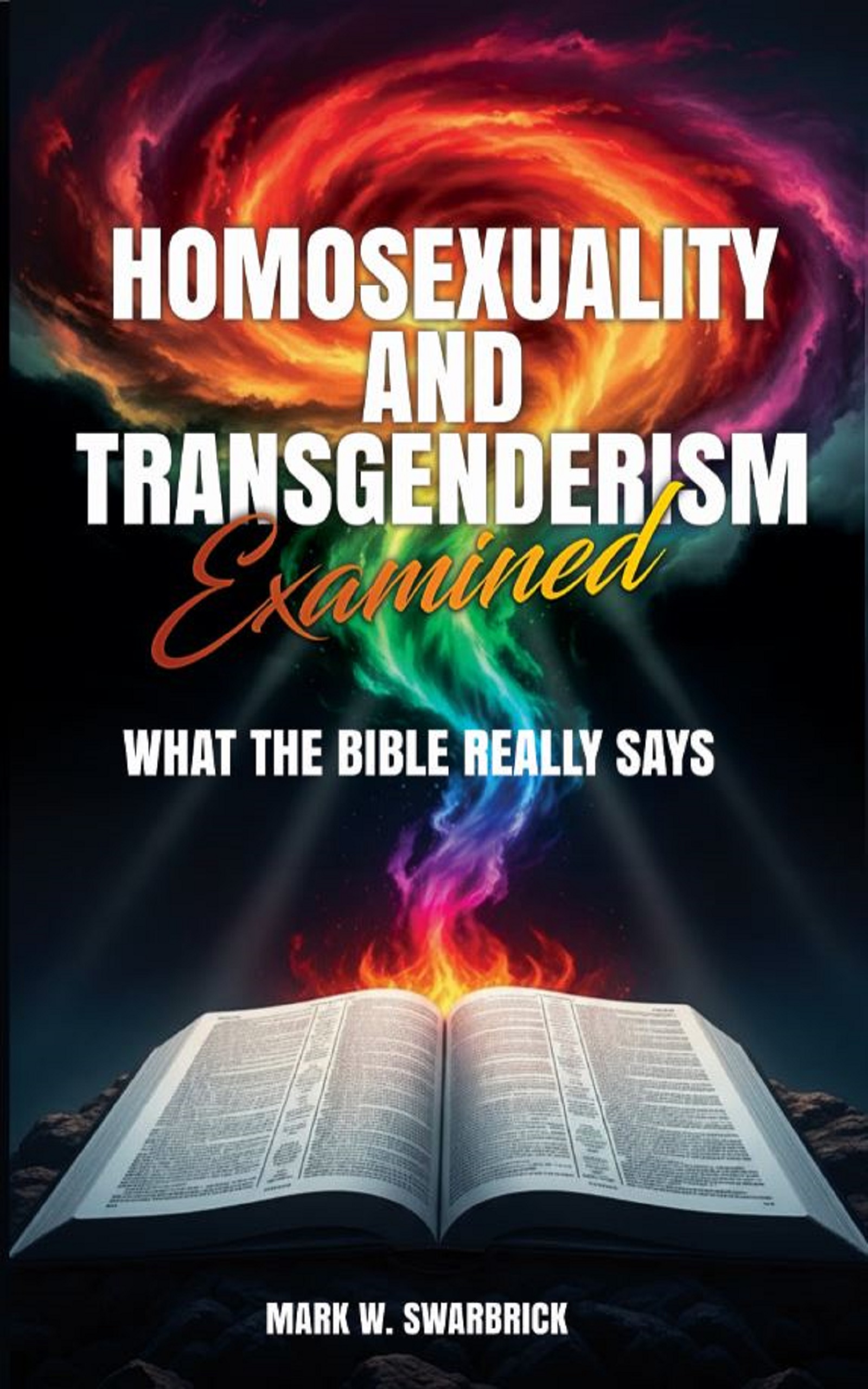 Homosexuality and Trangenderism Examined: What the Bible Really Says
Author Mark Swarbrick covers the key biblical passages on homosexuality and transgenderism, showing what Scripture teaches and how those teachings shaped Western moral order for nearly two millennia before being rejected in our time.
Available in Paperback, Kindle eBook, and Audio Book. Only $3.99 – Click
HERE
to purchase at Amazon.
Homosexuality and Trangenderism Examined: What the Bible Really Says
Author Mark Swarbrick covers the key biblical passages on homosexuality and transgenderism, showing what Scripture teaches and how those teachings shaped Western moral order for nearly two millennia before being rejected in our time.
Available in Paperback, Kindle eBook, and Audio Book. Only $3.99 – Click
HERE
to purchase at Amazon.
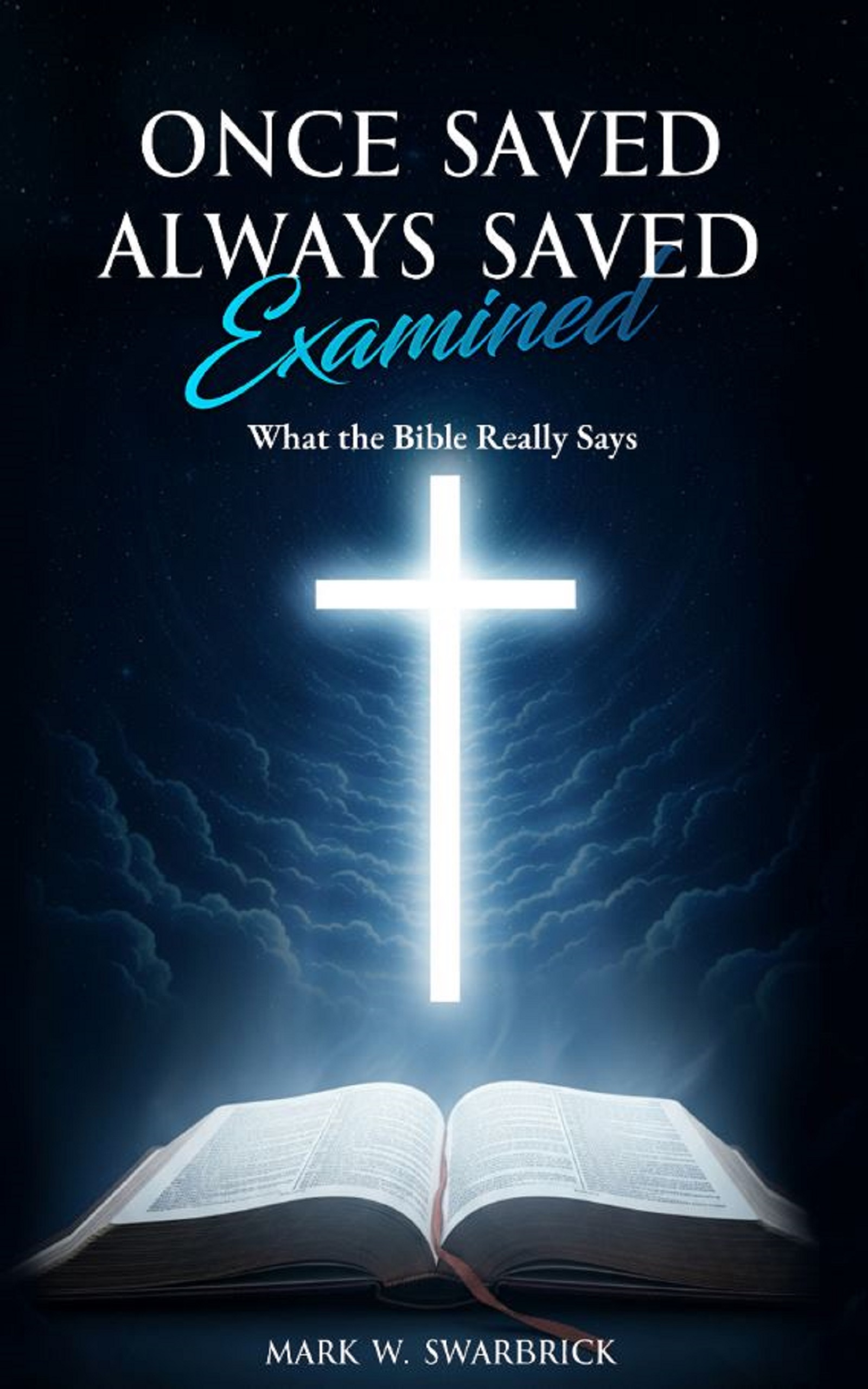 Once Saved Always Saved Examined: What the Bible Really Says
Author Mark Swarbrick covers the key biblical passages on unconditional security, showing what Scripture teaches and how the early Christian Church understood this important topic.
Available in Paperback, Kindle eBook, and Audio Book. Only $3.99 – Click
HERE
to purchase at Amazon.
Once Saved Always Saved Examined: What the Bible Really Says
Author Mark Swarbrick covers the key biblical passages on unconditional security, showing what Scripture teaches and how the early Christian Church understood this important topic.
Available in Paperback, Kindle eBook, and Audio Book. Only $3.99 – Click
HERE
to purchase at Amazon.
 The Mysterious Disappearance of Amelia Earhart Solved
Author Mark Swarbrick, a pilot trained at the University of Illinois Institute of Aviation and a licensed HAM radio operator, draws on his knowledge of cross-country navigation, aircraft performance, and shortwave radio to bring technical clarity to one of aviation’s greatest mysteries.
Available in Paperback, Kindle eBook, and Audio Book. Only $3.99 – Click
HERE
to purchase at Amazon.
The Mysterious Disappearance of Amelia Earhart Solved
Author Mark Swarbrick, a pilot trained at the University of Illinois Institute of Aviation and a licensed HAM radio operator, draws on his knowledge of cross-country navigation, aircraft performance, and shortwave radio to bring technical clarity to one of aviation’s greatest mysteries.
Available in Paperback, Kindle eBook, and Audio Book. Only $3.99 – Click
HERE
to purchase at Amazon.
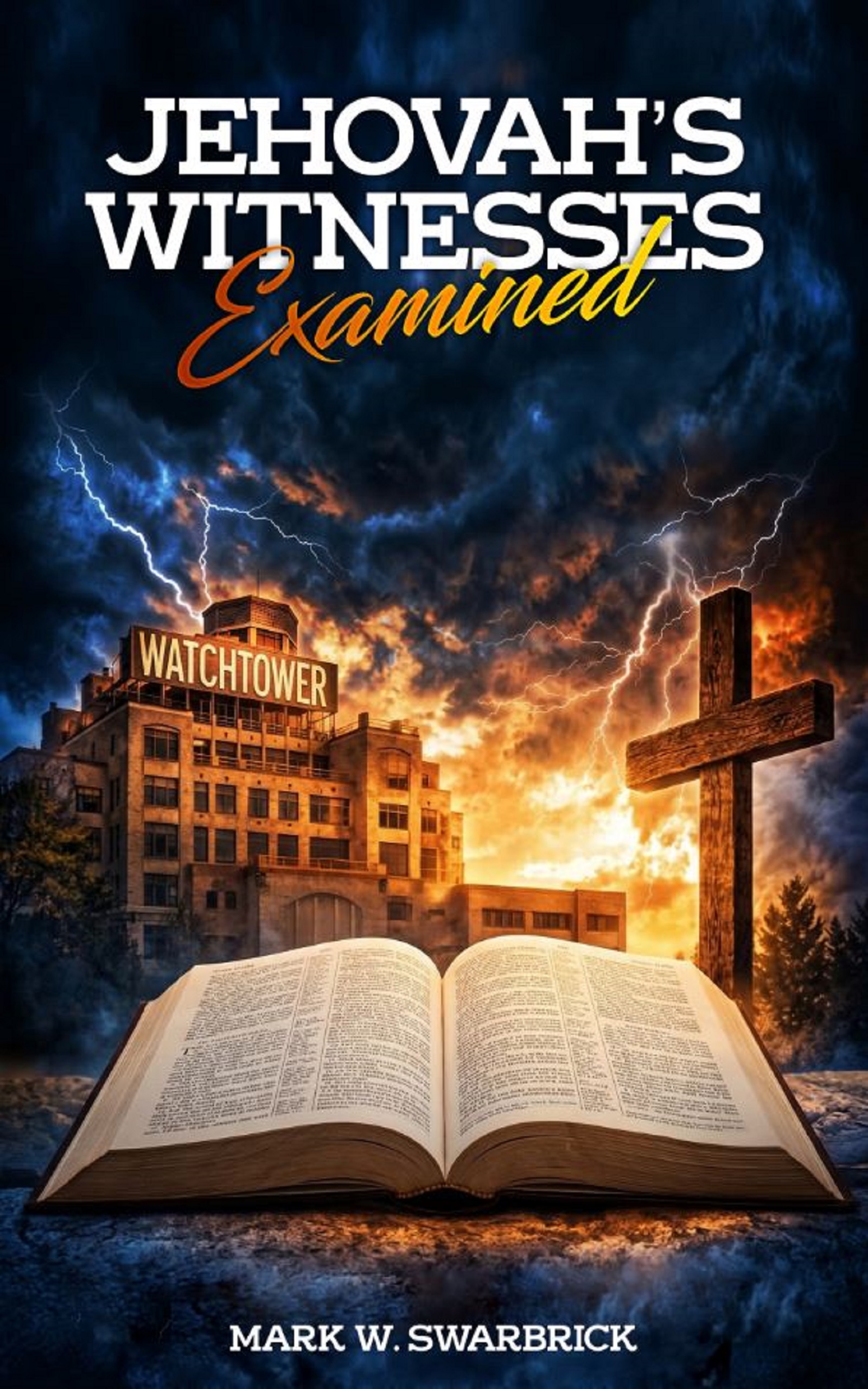 Jehovah's Witnesses Examined:
In Jehovah’s Witnesses Examined, author Mark W. Swarbrick carefully compares the doctrines of the Watchtower organization with the clear teaching of the Bible. This concise and readable book exposes the movement’s history, its controlling structure, and the serious doctrinal errors that separate it from historic Christianity.
Available in Paperback, Kindle eBook, and Audio Book. Only $4.99 – Click
HERE
to purchase at Amazon.
Jehovah's Witnesses Examined:
In Jehovah’s Witnesses Examined, author Mark W. Swarbrick carefully compares the doctrines of the Watchtower organization with the clear teaching of the Bible. This concise and readable book exposes the movement’s history, its controlling structure, and the serious doctrinal errors that separate it from historic Christianity.
Available in Paperback, Kindle eBook, and Audio Book. Only $4.99 – Click
HERE
to purchase at Amazon.

Thank you for so fully explaining the current middle east crisis.