
Is Baptism Essential to Salvation?
Is baptism essential to salvation? Many churches and sects claim that water baptism must be performed before a person can be saved. This belief, often called baptismal regeneration, turns baptism into the deciding factor of salvation. But is baptism essential to salvation, or is repentence and faith in Christ enough? At the bottom of this page you will find a list of articles on this site that deal with the question of baptism and salvation in greater detail.
The Bible consistently teaches that salvation is by grace through faith, not by works. Baptismal regeneration, if true, would turn salvation on its head, for if baptism is required for salvation, then faith is by works, not grace. Nevertheless, some groups that support baptismal regeneration argue that without baptism, salvation is impossible. The Catholic Church, the Church of Christ, and Oneness Pentecostal movements all maintain that baptism is essential to salvation. According to their view, a person cannot be forgiven until they are baptized in water. Some even proclaim, it must be their water!
If this teaching were correct, it would mean that the blood of Christ alone does not save. The cross would be incomplete until a person added the act of baptism. But Scripture teaches the opposite. The New Testament repeatedly emphasizes that salvation is the gift of God, not something earned through human effort. To say baptism is essential to salvation is to corrupt the gospel of grace with works.
Is Baptism Essential to Salvation?
The Bible answers clearly that salvation is through faith, not ritual. Cornelius and his household received the Holy Spirit before they were baptized, proving that God had already saved them apart from water. The thief on the cross entered paradise with Christ though he was never baptized. Zacchaeus was declared saved when he believed and repented, long before any baptism could take place.
These examples answer the question, does baptism save you? They also show that water baptism is not essential to salvation. Scripture consistently teaches that salvation comes through faith in Christ alone, while baptism follows as an act of obedience.
The Place of Baptism in the Christian Life
Rejecting baptism as a condition of salvation does not mean rejecting baptism itself. Baptism remains a command of Christ and the first step of obedience for new believers. It is a vivid symbol of dying to sin and rising to new life in Christ. Through baptism, Christians publicly declare their faith and identify with the death, burial, and resurrection of Jesus.
The early church gave baptism an important place. In Acts, converts were baptized soon after believing in Christ. This urgency shows that baptism is important in the Christian life. Yet the order is always the same: faith first, baptism after. Even though baptism is not essential to salvation, it is essential to obedience. We are baptized because we are saved, not in order to be saved.
Advocates of baptismal regeneration often misinterpret certain verses. Acts 2:38 is one of their favorites: “Repent and be baptized every one of you in the name of Jesus Christ for the forgiveness of your sins.” They argue this proves baptism is essential to salvation. But the Greek word translated “for” can also mean “because of.” Peter was calling for baptism because sins had been forgiven through repentance and faith, not in order to obtain forgiveness.
Mark 16:16 and the Long Ending of Mark
Advocates of baptismal regeneration often quote Mark 16:16: “He who believes and is baptized will be saved.” But the second half of the verse makes the real emphasis clear: “he who does not believe will be condemned.” Condemnation is tied to unbelief, not to the absence of baptism. If baptism were the requirement, the verse would have said, “he who is not baptized will be condemned.” Instead, faith is the decisive factor.
There is, however, an even greater issue. The evidence shows that the long ending of Mark (16:9–20) was not written by Mark or by anyone closely associated with an apostle. The earliest and best Greek manuscripts end at 16:8, and early church fathers such as Eusebius and Jerome confirmed that most copies in their day also ended there. The long ending was composed in the mid-second century, roughly 80 to 100 years after Mark wrote his Gospel, and then inserted into later copies.
The internal evidence also points to a different author. The vocabulary and sentence structure in these verses differ sharply from the rest of Mark’s Gospel, using words and expressions Mark never employs elsewhere. This change in Greek style is a strong indication that Mark was not the author.
Because the long ending was added long after the apostolic age, and because its language and style mark it as foreign to Mark, it is not part of the inspired Word of God. It may hold historical interest, but it cannot be used to establish doctrine. Sadly, this spurious passage has been misused to support false teachings such as baptismal regeneration and snake handling, the latter practice leading to many needless deaths. For this reason, most good modern Bible translations include a note explaining that Mark 16:9–20 was not found in the earliest manuscripts and was added much later.
Romans 10:9 offers one of the clearest answers: “If you confess with your mouth the Lord Jesus and believe in your heart that God raised Him from the dead, you will be saved.” No mention of baptism appears in this verse. Faith is the condition of salvation. Baptism comes afterward as its sign.
Conclusion
So, is baptism needed for salvation? Is baptism essential to salvation? The biblical answer is no. Baptism is commanded and important, but salvation is received by faith alone in Jesus Christ. To insist that baptism is required is to add human effort to the finished work of Christ and to preach another gospel. Baptism is vital for obedience, but it is never the condition of eternal life.
Articles on this Site about Baptism and Salvation
Have a Question or Insight? Join the Discussion — To Comment, Scroll to the Bottom. Please Be Courteous and Stay on Topic.
Books by Mark Swarbrick
 For more information on Jimmy Swaggart Ministries, get my book, Swaggartism: The Strange Doctrines of Jimmy Swaggart Ministries, available now on Amazon in paperback, Kindle eBook, and audio book, starting at only $6.99. For information click HERE.
Available in Paperback and Kindle eBook – 266 pages of documented facts!
For more information on Jimmy Swaggart Ministries, get my book, Swaggartism: The Strange Doctrines of Jimmy Swaggart Ministries, available now on Amazon in paperback, Kindle eBook, and audio book, starting at only $6.99. For information click HERE.
Available in Paperback and Kindle eBook – 266 pages of documented facts!


 Seventh-Day Adventism Examined: A Concise Summary of Adventism's Unbiblical Doctrines
Author Mark Swarbrick meticulously dissects the myriad of false teachings within Adventism, contrasting these interpretations with scriptural truth.
Available in Paperback, Kindle eBook, and Audio Book. Only $3.99 - Click HERE to purchase at Amazon.
Seventh-Day Adventism Examined: A Concise Summary of Adventism's Unbiblical Doctrines
Author Mark Swarbrick meticulously dissects the myriad of false teachings within Adventism, contrasting these interpretations with scriptural truth.
Available in Paperback, Kindle eBook, and Audio Book. Only $3.99 - Click HERE to purchase at Amazon.
 The Pre-Trib Rapture: Biblical Truth of the Blessed Hope
In his book, The Pre-Trib Rapture, author Mark Swarbrick meticulously outlines the extensive biblical support for a Pre-Trib Rapture, emphasizing the deliverance of the Church before the onset of the impending Tribulation period.
Available in Paperback, Kindle eBook, and Audio Book. Only $3.99 - Click HERE to purchase at Amazon.
The Pre-Trib Rapture: Biblical Truth of the Blessed Hope
In his book, The Pre-Trib Rapture, author Mark Swarbrick meticulously outlines the extensive biblical support for a Pre-Trib Rapture, emphasizing the deliverance of the Church before the onset of the impending Tribulation period.
Available in Paperback, Kindle eBook, and Audio Book. Only $3.99 - Click HERE to purchase at Amazon.
 Hidden History: The Untold Story of the Democratic Party
The political narrative in America has transcended the realm of politics to become a battle between the forces of good and evil. It is essential that all Christians are informed on the anti-Christian direction of the Democratic Party.
200 pages of factual history! Available in Paperback, Kindle eBook, and Audio Book. Only $3.99 - Click HERE to purchase at Amazon.
Hidden History: The Untold Story of the Democratic Party
The political narrative in America has transcended the realm of politics to become a battle between the forces of good and evil. It is essential that all Christians are informed on the anti-Christian direction of the Democratic Party.
200 pages of factual history! Available in Paperback, Kindle eBook, and Audio Book. Only $3.99 - Click HERE to purchase at Amazon.
 The Covid Conspiracy: The Cure for Covid and the Plot to Hide it from the World
The Covid Conspiracy tells the incredible story of diabolical collusion between multinational drug companies, governmental regulatory agencies, and unscrupulous politicians.
Available in Paperback, Kindle eBook, and Audio Book. Only $2.99 - Click HERE to purchase at Amazon.
The Covid Conspiracy: The Cure for Covid and the Plot to Hide it from the World
The Covid Conspiracy tells the incredible story of diabolical collusion between multinational drug companies, governmental regulatory agencies, and unscrupulous politicians.
Available in Paperback, Kindle eBook, and Audio Book. Only $2.99 - Click HERE to purchase at Amazon.
 The Carnivore Diet: The Science, the Promise, and the Pitfalls
Author Mark Swarbrick thoroughly explains the diet, telling of his experiences with it and how it has radically improved his health in a short amount of time. One chapter deals with the current war on meat and what the Bible has to say about those who forbid eating meat.
Available in Paperback, Kindle eBook, and Audio Book. Only $2.99 - Click HERE to purchase at Amazon.
The Carnivore Diet: The Science, the Promise, and the Pitfalls
Author Mark Swarbrick thoroughly explains the diet, telling of his experiences with it and how it has radically improved his health in a short amount of time. One chapter deals with the current war on meat and what the Bible has to say about those who forbid eating meat.
Available in Paperback, Kindle eBook, and Audio Book. Only $2.99 - Click HERE to purchase at Amazon.
 Heavenly Miracles: True Stories of Supernatural Intervention
When the author saw how demons flee at the name of Jesus, his growing faith resulted in numerous miracles in his life and ministry.
Available in Paperback, Kindle eBook, and Audio Book. Only $2.99 - Click HERE to purchase at Amazon.
Heavenly Miracles: True Stories of Supernatural Intervention
When the author saw how demons flee at the name of Jesus, his growing faith resulted in numerous miracles in his life and ministry.
Available in Paperback, Kindle eBook, and Audio Book. Only $2.99 - Click HERE to purchase at Amazon.
 King James Onlyism: Is the KJV the Best Bible Version?
KJV Onlyists have troubled the hearts of many a Christianand have split churches in half. Controversy, factions, and strive are their forte. No doubt, they are sincere, but they are sincerely wrong.
Available in Paperback, Kindle eBook, and Audio Book. Only $2.99 - Click HERE to purchase at Amazon.
King James Onlyism: Is the KJV the Best Bible Version?
KJV Onlyists have troubled the hearts of many a Christianand have split churches in half. Controversy, factions, and strive are their forte. No doubt, they are sincere, but they are sincerely wrong.
Available in Paperback, Kindle eBook, and Audio Book. Only $2.99 - Click HERE to purchase at Amazon.

 The Hidden Truth about Catholicism
If you are a Catholic this book is for you. With loving respect, this book gives a detailed account of the history of Catholicism with an in-depth analysis of Catholic teachings.
Available in Paperback, Kindle eBook, and Audio Book. Only $2.99 - Click HERE to purchase at Amazon.
The Hidden Truth about Catholicism
If you are a Catholic this book is for you. With loving respect, this book gives a detailed account of the history of Catholicism with an in-depth analysis of Catholic teachings.
Available in Paperback, Kindle eBook, and Audio Book. Only $2.99 - Click HERE to purchase at Amazon.
 Life after Death: What Happens When We Die?
A refutation of soul sleep, the idea that people are unconscious or nonexistent until God raises their bodies from the dead at the resurrection.
Available in Paperback, Kindle eBook, and Audio Book. Only $2.99 - Click HERE to purchase at Amazon.
Life after Death: What Happens When We Die?
A refutation of soul sleep, the idea that people are unconscious or nonexistent until God raises their bodies from the dead at the resurrection.
Available in Paperback, Kindle eBook, and Audio Book. Only $2.99 - Click HERE to purchase at Amazon.
 Mormonism Examined: The Bizarre History and Unbiblical Doctrines of Mormonism
This is not an anti-Mormon rant, but a thoughtful analysis of Mormonism in the light of the Holy Bible and historic Christian doctrine.
Available in Paperback, Kindle eBook, and Audio Book. Only $4.99 - Click HERE to purchase at Amazon.
Mormonism Examined: The Bizarre History and Unbiblical Doctrines of Mormonism
This is not an anti-Mormon rant, but a thoughtful analysis of Mormonism in the light of the Holy Bible and historic Christian doctrine.
Available in Paperback, Kindle eBook, and Audio Book. Only $4.99 - Click HERE to purchase at Amazon.
 Truly Amazing: The Real Story of Adam and Eve
Children get bombarded with confusion about gender, marriage, and evolution at a very young age.This book shows what God has to say on these crucial matters. This book is a creation story for kids that explains the creation and the fall in an interesting way that children can relate to.
Available in Paperback, Kindle eBook, and Audio Book. Only $2.99 - Click HERE to purchase at Amazon.
Truly Amazing: The Real Story of Adam and Eve
Children get bombarded with confusion about gender, marriage, and evolution at a very young age.This book shows what God has to say on these crucial matters. This book is a creation story for kids that explains the creation and the fall in an interesting way that children can relate to.
Available in Paperback, Kindle eBook, and Audio Book. Only $2.99 - Click HERE to purchase at Amazon.
 Global Warming: Socialism in Disguise
In "Global Warming Examined," Mark Swarbrick compellingly illustrates how genuine scientific data contradicts the prevalent political narrative of an imminent climate crisis. Drawing on insights from esteemed scientists, he dismantles the fallacious belief in man-made global warming as a cataclysmic threat.
Available in Paperback, Kindle eBook, and Audio Book. Only $3.99 - Click HERE to purchase at Amazon.
Global Warming: Socialism in Disguise
In "Global Warming Examined," Mark Swarbrick compellingly illustrates how genuine scientific data contradicts the prevalent political narrative of an imminent climate crisis. Drawing on insights from esteemed scientists, he dismantles the fallacious belief in man-made global warming as a cataclysmic threat.
Available in Paperback, Kindle eBook, and Audio Book. Only $3.99 - Click HERE to purchase at Amazon.
 Beyond Redemption: Love and Longing in the Old West (Book 1)
A thrilling historical western and romance packed with Gospel truth. A perfect gift for someone you want to share the Gospel with. Here is what one reader said about Beyond Redemption:
“THIS READ IS A GRIPPING JOURNEY back in time to the rugged Wild West, where love, justice, and redemption entwine in a tale that will leave you captivated. Author Mark Swarbrick skillfully weaves historical detail into this action-packed narrative, giving readers an authentic and suspenseful experience. The story revolves around Cal Chandler, an unlikely outlaw forced into a life of crime, and his love for Jessica Lorena McKenzie, a devout Christian, creating a captivating clash of faiths and emotions. For fans of historical depth, “Beyond Redemption” is a must-read that brings the people of the Wild West to life as they truly were." — Jerry Rubenstein
Beyond Redemption: Love and Longing in the Old West (Book 1)
A thrilling historical western and romance packed with Gospel truth. A perfect gift for someone you want to share the Gospel with. Here is what one reader said about Beyond Redemption:
“THIS READ IS A GRIPPING JOURNEY back in time to the rugged Wild West, where love, justice, and redemption entwine in a tale that will leave you captivated. Author Mark Swarbrick skillfully weaves historical detail into this action-packed narrative, giving readers an authentic and suspenseful experience. The story revolves around Cal Chandler, an unlikely outlaw forced into a life of crime, and his love for Jessica Lorena McKenzie, a devout Christian, creating a captivating clash of faiths and emotions. For fans of historical depth, “Beyond Redemption” is a must-read that brings the people of the Wild West to life as they truly were." — Jerry Rubenstein
Available in Paperback, Kindle eBook, and Audio Book. Only $6.99 - Click HERE to purchase at Amazon.
 Beyond Redemption: War & Peace in the Old West (Book 2)
The Second Book in the Beyond Redemption series. How the characters prayerfully deal with their challenges is a testament to the changing power of the Gospel of Jesus Christ.
Available in Paperback, Kindle eBook, and Audio Book. Only $9.99 - Click HERE to purchase.
Beyond Redemption: War & Peace in the Old West (Book 2)
The Second Book in the Beyond Redemption series. How the characters prayerfully deal with their challenges is a testament to the changing power of the Gospel of Jesus Christ.
Available in Paperback, Kindle eBook, and Audio Book. Only $9.99 - Click HERE to purchase.
 Beyond Redemption: Joy and Suffering in the Old West (Book 3)
The Third Book in the Beyond Redemption series. Life on the Arizona frontier is never without hardship. Unexpected trials test the faith of Cal and Lorena and threaten those they love.
Available in Paperback, Hardback, Kindle eBook, and Audio Book. Only $9.99 - Click HERE to purchase.
Beyond Redemption: Joy and Suffering in the Old West (Book 3)
The Third Book in the Beyond Redemption series. Life on the Arizona frontier is never without hardship. Unexpected trials test the faith of Cal and Lorena and threaten those they love.
Available in Paperback, Hardback, Kindle eBook, and Audio Book. Only $9.99 - Click HERE to purchase.
 Abducted by Demons - Saved by Jesus: My Journey for Hell to Heaven
Join Mark Swarbrick on a heart-wrenching journey from the depths of demonic oppression to the transformative peace and salvation found in Christ.
Available in Paperback, Kindle eBook, and Audio Book. Only $3.99 - Click HERE to purchase at Amazon.
Abducted by Demons - Saved by Jesus: My Journey for Hell to Heaven
Join Mark Swarbrick on a heart-wrenching journey from the depths of demonic oppression to the transformative peace and salvation found in Christ.
Available in Paperback, Kindle eBook, and Audio Book. Only $3.99 - Click HERE to purchase at Amazon.
 Fossil Fuels – God’s Gift to Man: How God used Coal, Oil, and Natural Gas to Save Mankind
In this eye-opening book, Mark Swarbrick challenges the prevailing narrative surrounding fossil fuels and climate change, showing that coal, oil, and natural gas are not environmental villains, but rather divine provisions strategically placed by God to sustain humanity's growing population.
Available in Paperback, Kindle eBook, and Audio Book. Only $3.99 - Click HERE to purchase.
Fossil Fuels – God’s Gift to Man: How God used Coal, Oil, and Natural Gas to Save Mankind
In this eye-opening book, Mark Swarbrick challenges the prevailing narrative surrounding fossil fuels and climate change, showing that coal, oil, and natural gas are not environmental villains, but rather divine provisions strategically placed by God to sustain humanity's growing population.
Available in Paperback, Kindle eBook, and Audio Book. Only $3.99 - Click HERE to purchase.
 Word of Faith Examined: A Refutation of the Prosperity Gospel's Unbiblical Doctrines
In this bold and timely book, pastor and author Mark Swarbrick exposes the dangers and distortions at the heart of the Word of Faith movement, also known as the “Name-it-and-Claim-it” or “Health and Wealth Gospel.”
Available in Paperback, Kindle eBook, and Audio Book. Only $3.99 - Click HERE to purchase.
Word of Faith Examined: A Refutation of the Prosperity Gospel's Unbiblical Doctrines
In this bold and timely book, pastor and author Mark Swarbrick exposes the dangers and distortions at the heart of the Word of Faith movement, also known as the “Name-it-and-Claim-it” or “Health and Wealth Gospel.”
Available in Paperback, Kindle eBook, and Audio Book. Only $3.99 - Click HERE to purchase.
 The Israel of God: A Christian and Biblical Perspective of the Modern State of Israel
Author Mark Swarbrick delivers a clear, biblically grounded exploration of Israel’s unique place in God’s redemptive plan—past, present, and future.
Available in Paperback, Kindle eBook, and Audio Book. Only $3.99 – Click HERE to purchase at Amazon.
The Israel of God: A Christian and Biblical Perspective of the Modern State of Israel
Author Mark Swarbrick delivers a clear, biblically grounded exploration of Israel’s unique place in God’s redemptive plan—past, present, and future.
Available in Paperback, Kindle eBook, and Audio Book. Only $3.99 – Click HERE to purchase at Amazon.
 Extraterrestrials Exposed: The Scientific and Biblical Evidence of a Grand Deception
Drawing on extensive research, author Mark Swarbrick uncovers how claims of alien encounters, UFO sightings, and government disclosures may not be what they seem. He presents a thought-provoking analysis that combines scientific inquiry with biblical teachings, suggesting that what many perceive as alien phenomena could actually be a sophisticated ruse designed to mislead humanity.
Available in Paperback, Kindle eBook, and Audio Book. Only $2.99 – Click
HERE
to purchase at Amazon.
Extraterrestrials Exposed: The Scientific and Biblical Evidence of a Grand Deception
Drawing on extensive research, author Mark Swarbrick uncovers how claims of alien encounters, UFO sightings, and government disclosures may not be what they seem. He presents a thought-provoking analysis that combines scientific inquiry with biblical teachings, suggesting that what many perceive as alien phenomena could actually be a sophisticated ruse designed to mislead humanity.
Available in Paperback, Kindle eBook, and Audio Book. Only $2.99 – Click
HERE
to purchase at Amazon.
 Socialism Examined: Man's Secular Answer to a Spiritual Problem
Author Mark Swarbrick explains, in simple terms, why socialism conflicts with biblical truth and why it consistently harms the very people it claims to help. You will learn how modern political leaders use fear, crisis, and entitlement to push a country toward greater state control — and why many don’t recognize it until it’s too late.
Available in Paperback, Kindle eBook, and Audio Book. Only $3.99 – Click
HERE
to purchase at Amazon.
Socialism Examined: Man's Secular Answer to a Spiritual Problem
Author Mark Swarbrick explains, in simple terms, why socialism conflicts with biblical truth and why it consistently harms the very people it claims to help. You will learn how modern political leaders use fear, crisis, and entitlement to push a country toward greater state control — and why many don’t recognize it until it’s too late.
Available in Paperback, Kindle eBook, and Audio Book. Only $3.99 – Click
HERE
to purchase at Amazon.
 Homosexuality and Transgenderism Examined: What the Bible Really Says
Author Mark Swarbrick covers the key biblical passages on homosexuality and transgenderism, showing what Scripture teaches and how those teachings shaped Western moral order for nearly two millennia before being rejected in our time.
Available in Paperback, Kindle eBook, and Audio Book. Only $3.99 – Click
HERE
to purchase at Amazon.
Homosexuality and Transgenderism Examined: What the Bible Really Says
Author Mark Swarbrick covers the key biblical passages on homosexuality and transgenderism, showing what Scripture teaches and how those teachings shaped Western moral order for nearly two millennia before being rejected in our time.
Available in Paperback, Kindle eBook, and Audio Book. Only $3.99 – Click
HERE
to purchase at Amazon.
 Once Saved Always Saved Examined: What the Bible Really Says
Author Mark Swarbrick covers the key biblical passages on unconditional security, showing what Scripture teaches and how the early Christian Church understood this important topic.
Available in Paperback, Kindle eBook, and Audio Book. Only $3.99 – Click
HERE
to purchase at Amazon.
Once Saved Always Saved Examined: What the Bible Really Says
Author Mark Swarbrick covers the key biblical passages on unconditional security, showing what Scripture teaches and how the early Christian Church understood this important topic.
Available in Paperback, Kindle eBook, and Audio Book. Only $3.99 – Click
HERE
to purchase at Amazon.
 The Mysterious Disappearance of Amelia Earhart Solved
Author Mark Swarbrick, a pilot trained at the University of Illinois Institute of Aviation and a licensed HAM radio operator, draws on his knowledge of cross-country navigation, aircraft performance, and shortwave radio to bring technical clarity to one of aviation’s greatest mysteries.
Available in Paperback, Kindle eBook, and Audio Book. Only $3.99 – Click
HERE
to purchase at Amazon.
The Mysterious Disappearance of Amelia Earhart Solved
Author Mark Swarbrick, a pilot trained at the University of Illinois Institute of Aviation and a licensed HAM radio operator, draws on his knowledge of cross-country navigation, aircraft performance, and shortwave radio to bring technical clarity to one of aviation’s greatest mysteries.
Available in Paperback, Kindle eBook, and Audio Book. Only $3.99 – Click
HERE
to purchase at Amazon.
 Jehovah's Witnesses Examined:
In Jehovah’s Witnesses Examined, author Mark W. Swarbrick carefully compares the doctrines of the Watchtower organization with the clear teaching of the Bible. This concise and readable book exposes the movement’s history, its controlling structure, and the serious doctrinal errors that separate it from historic Christianity.
Available in Paperback, Kindle eBook, and Audio Book. Only $4.99 – Click
HERE
to purchase at Amazon.
Jehovah's Witnesses Examined:
In Jehovah’s Witnesses Examined, author Mark W. Swarbrick carefully compares the doctrines of the Watchtower organization with the clear teaching of the Bible. This concise and readable book exposes the movement’s history, its controlling structure, and the serious doctrinal errors that separate it from historic Christianity.
Available in Paperback, Kindle eBook, and Audio Book. Only $4.99 – Click
HERE
to purchase at Amazon.
 The Mysterious Disappearance of D.B. Cooper Solved.
In The Mysterious Disappearance of D.B. Cooper - Solved, Mark Swarbrick cuts through decades of speculation to present a clear, evidence-based case identifying the man behind the crime.
Available in Paperback, Kindle eBook, and Audio Book. Only $3.99 – Click
HERE
to purchase at Amazon.
The Mysterious Disappearance of D.B. Cooper Solved.
In The Mysterious Disappearance of D.B. Cooper - Solved, Mark Swarbrick cuts through decades of speculation to present a clear, evidence-based case identifying the man behind the crime.
Available in Paperback, Kindle eBook, and Audio Book. Only $3.99 – Click
HERE
to purchase at Amazon.
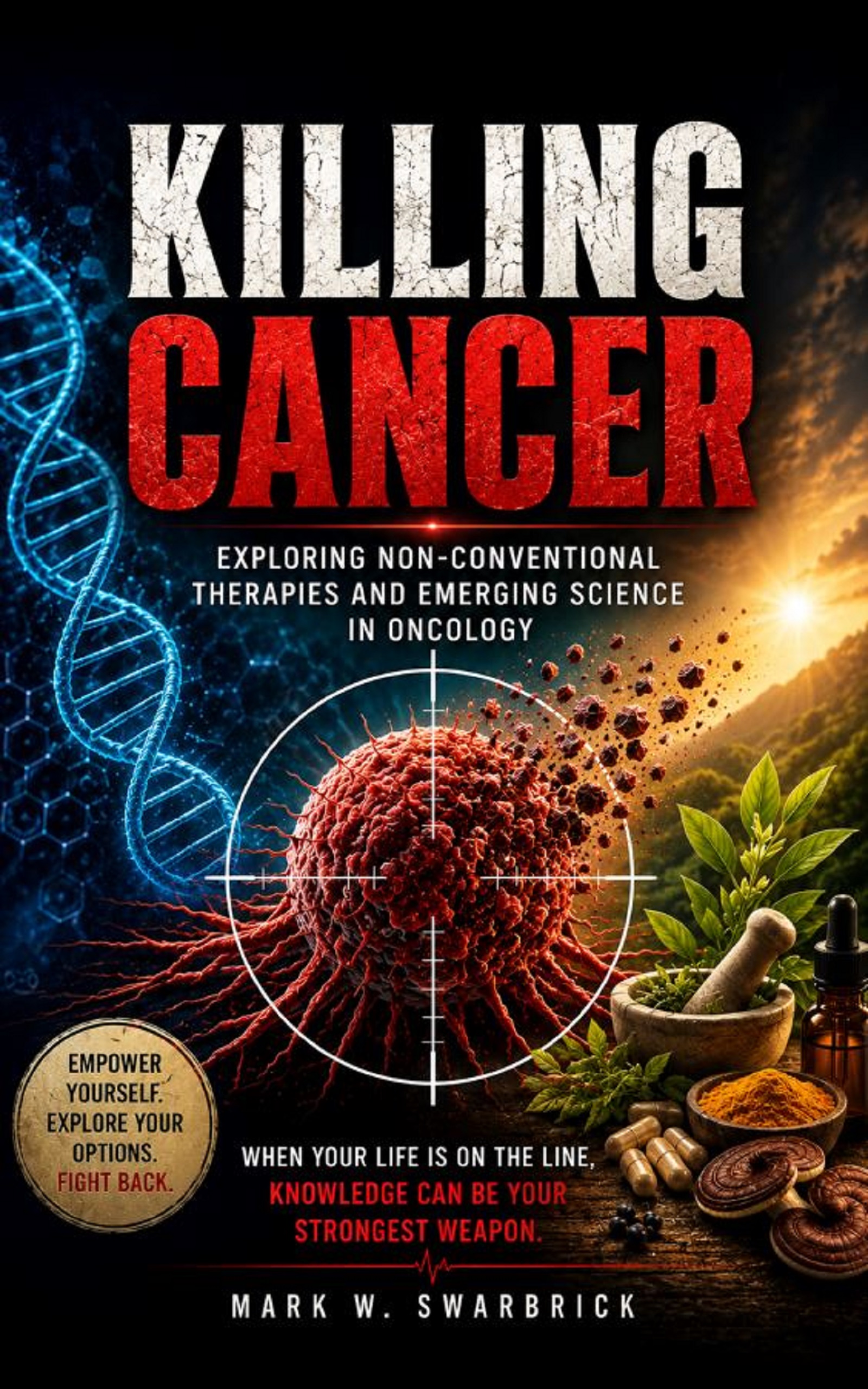 Killing Cancer: Exploring Non-Conventional Therapies and Emerging Science in Oncology.
In Killing Cancer, Mark Swarbrick dives deep into more than two dozen alternative and integrative approaches that patients and researchers around the world are exploring. Drawing from scientific studies, clinical observations, and compelling anecdotal reports, this book examines therapies that range from repurposed drugs like ivermectin and fenbendazole, to natural compounds like curcumin, artemisinin, Turkey Tail mushroom (PSK & PSP), high-dose vitamins D3 & K2, red light therapy, and ketogenic or fasting-based diets.
Available in Paperback, Kindle eBook, and Audio Book. Only $3.99 – Click
HERE
to purchase at Amazon.
Killing Cancer: Exploring Non-Conventional Therapies and Emerging Science in Oncology.
In Killing Cancer, Mark Swarbrick dives deep into more than two dozen alternative and integrative approaches that patients and researchers around the world are exploring. Drawing from scientific studies, clinical observations, and compelling anecdotal reports, this book examines therapies that range from repurposed drugs like ivermectin and fenbendazole, to natural compounds like curcumin, artemisinin, Turkey Tail mushroom (PSK & PSP), high-dose vitamins D3 & K2, red light therapy, and ketogenic or fasting-based diets.
Available in Paperback, Kindle eBook, and Audio Book. Only $3.99 – Click
HERE
to purchase at Amazon.
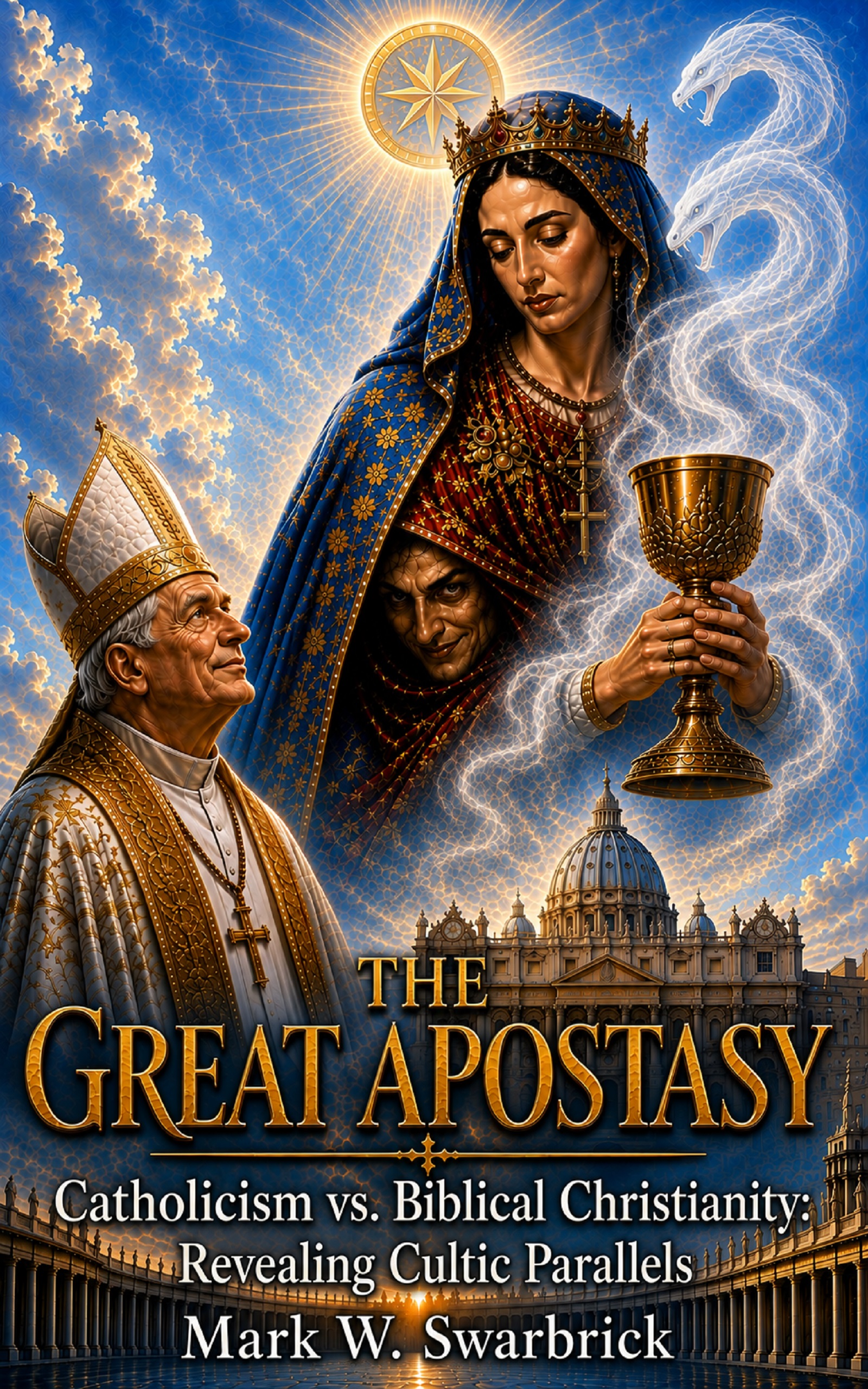 The Great Apostasy - Catholicism vs. Biblical Christianity: Revealing Cultic Parallels.
Author Mark Swarbrick’s definitive work on Catholicism examines the papacy, Mary, purgatory, the priesthood, salvation by works, transubstantiation, confession, tradition, religious persecution, and much more. Doctrine by doctrine, he compares the teachings of Rome with Scripture and builds the case that Catholicism bears the defining marks of a non-Christian cult. Then, turning to history and Bible prophecy, Swarbrick presents the provocative case that Roman Catholicism is more than a cult: It is the great apostasy foretold in Scripture. This book challenges Catholics and Protestants alike to set aside tradition, examine the evidence, and judge for themselves.
Available in Paperback, Hardback, Kindle eBook, and Audio Book. Only $6.99 – Click
HERE
to purchase at Amazon.
The Great Apostasy - Catholicism vs. Biblical Christianity: Revealing Cultic Parallels.
Author Mark Swarbrick’s definitive work on Catholicism examines the papacy, Mary, purgatory, the priesthood, salvation by works, transubstantiation, confession, tradition, religious persecution, and much more. Doctrine by doctrine, he compares the teachings of Rome with Scripture and builds the case that Catholicism bears the defining marks of a non-Christian cult. Then, turning to history and Bible prophecy, Swarbrick presents the provocative case that Roman Catholicism is more than a cult: It is the great apostasy foretold in Scripture. This book challenges Catholics and Protestants alike to set aside tradition, examine the evidence, and judge for themselves.
Available in Paperback, Hardback, Kindle eBook, and Audio Book. Only $6.99 – Click
HERE
to purchase at Amazon.
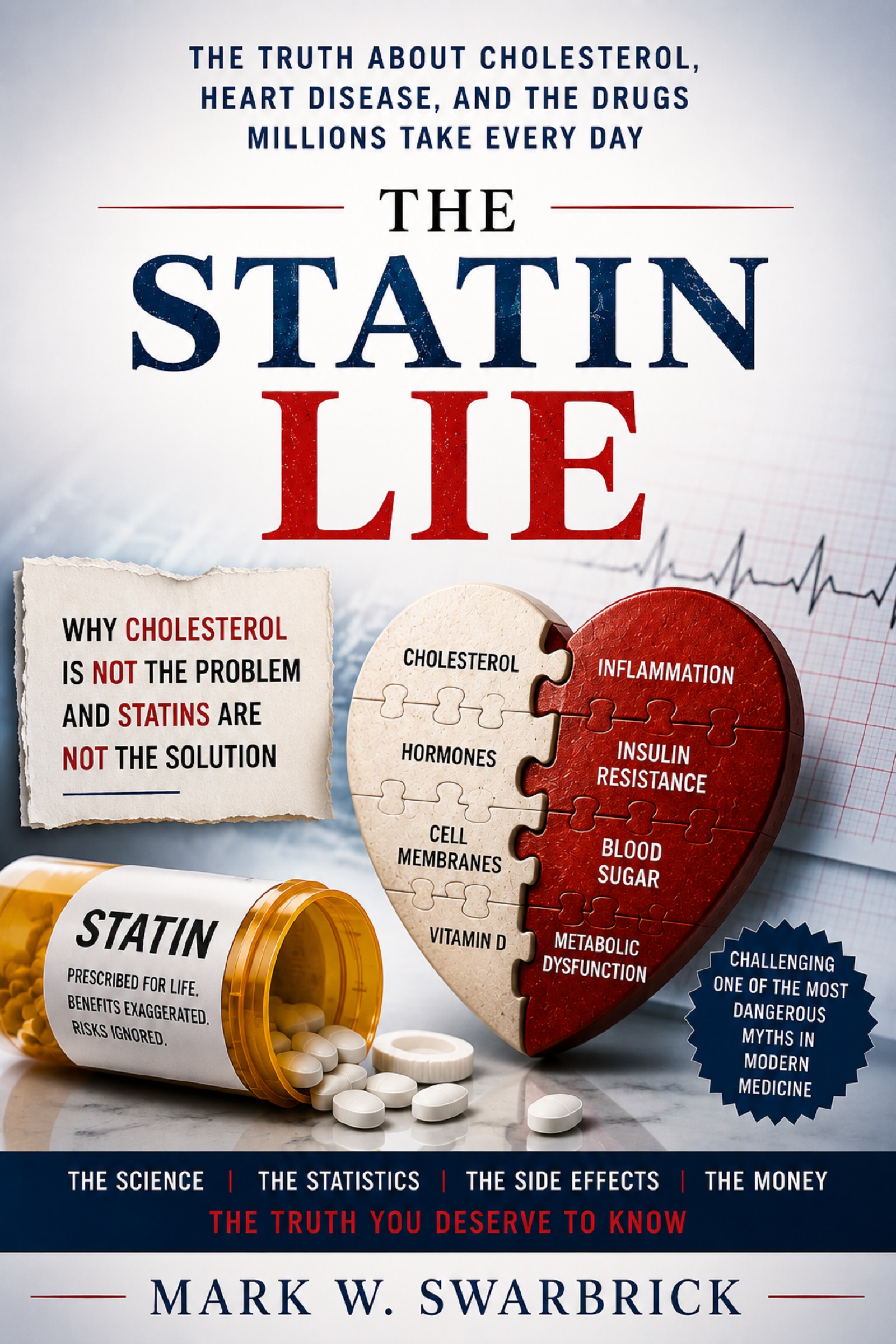 The Statin Lie: Why Cholesterol is not the Problem and Statins are not the Solution.
If you take a statin or have been told you need one, you deserve to hear the other side of the story. In The Statin Lie author Mark Swarbrick examines how cholesterol became the villain, how statistics can make modest statin benefits appear enormous, the side effects associated with these drugs, and the billions of dollars behind the statin industry.
Available in Paperback, Kindle eBook, and Audio Book. Only $4.99 – Click
HERE
to purchase at Amazon.
The Statin Lie: Why Cholesterol is not the Problem and Statins are not the Solution.
If you take a statin or have been told you need one, you deserve to hear the other side of the story. In The Statin Lie author Mark Swarbrick examines how cholesterol became the villain, how statistics can make modest statin benefits appear enormous, the side effects associated with these drugs, and the billions of dollars behind the statin industry.
Available in Paperback, Kindle eBook, and Audio Book. Only $4.99 – Click
HERE
to purchase at Amazon.
