This page lists articles covering Jehovah’s Witnesses (see below). Jehovah’s Witnesses hardly resemble Christianity at all. They are best known as the people who knock on your door masquerading as Christians, interrupting your day, but behind the polite smiles is a system of teachings that directly oppose the core of the Christian faith. When you look at jehovah witness versus christianity, the differences are unmistakable: they reject the Trinity, deny the full deity of Jesus Christ, teach “soul sleep,” and follow an organization that has repeatedly set failed end-time dates. For these reasons, across the historic Christian church they are universally regarded as a cult rather than a Christian denomination.
History and Founder — Charles Taze Russell and After
The movement began in the 1870s with Charles Taze Russell, a gifted organizer but an untrained theologian. Russell blended Adventist speculations with his own timelines, teaching an invisible return of Christ and centering the year 1914 as prophetically decisive. He promoted the divine name “Jehovah” as a shibboleth of true faith and cultivated deep distrust of all churches. Russell’s career was marked by controversy — from sensational date-setting to the notorious “miracle wheat” episode and public courtroom embarrassments — yet his publications built the framework later leaders would tighten. After Russell’s death, Joseph “Judge” Rutherford consolidated power, renamed the movement “Jehovah’s Witnesses,” and enforced strict organizational loyalty, paving the way for the centralized control the Watch Tower Bible and Tract Society wields today.
Doctrines Compared — Jehovah Witness Versus Christianity
When comparing Jehovah Witness versus christianity, consider that historic Christianity confesses one God in three Persons — Father, Son, and Holy Spirit. Jehovah’s Witnesses deny the Trinity and reduce Jesus to a created being (often identified with the archangel Michael). Where Scripture proclaims “the Word was God” (John 1:1), the Watchtower’s New World Translation renders it “a god,” diminishing Christ’s glory and undermining the gospel. On the afterlife, Christians hold that believers who die are present with the Lord, while Jehovah’s Witnesses teach a form of “soul sleep” — the dead are unconscious until a future resurrection. Add to this a works-heavy system tied to organizational loyalty and literature distribution, and you have a religion centered not on grace but on compliance with an institution. These are not side issues; they strike the heart of the Christian faith and answer the question are Jehovah’s Witnesses a cult with a sober yes.
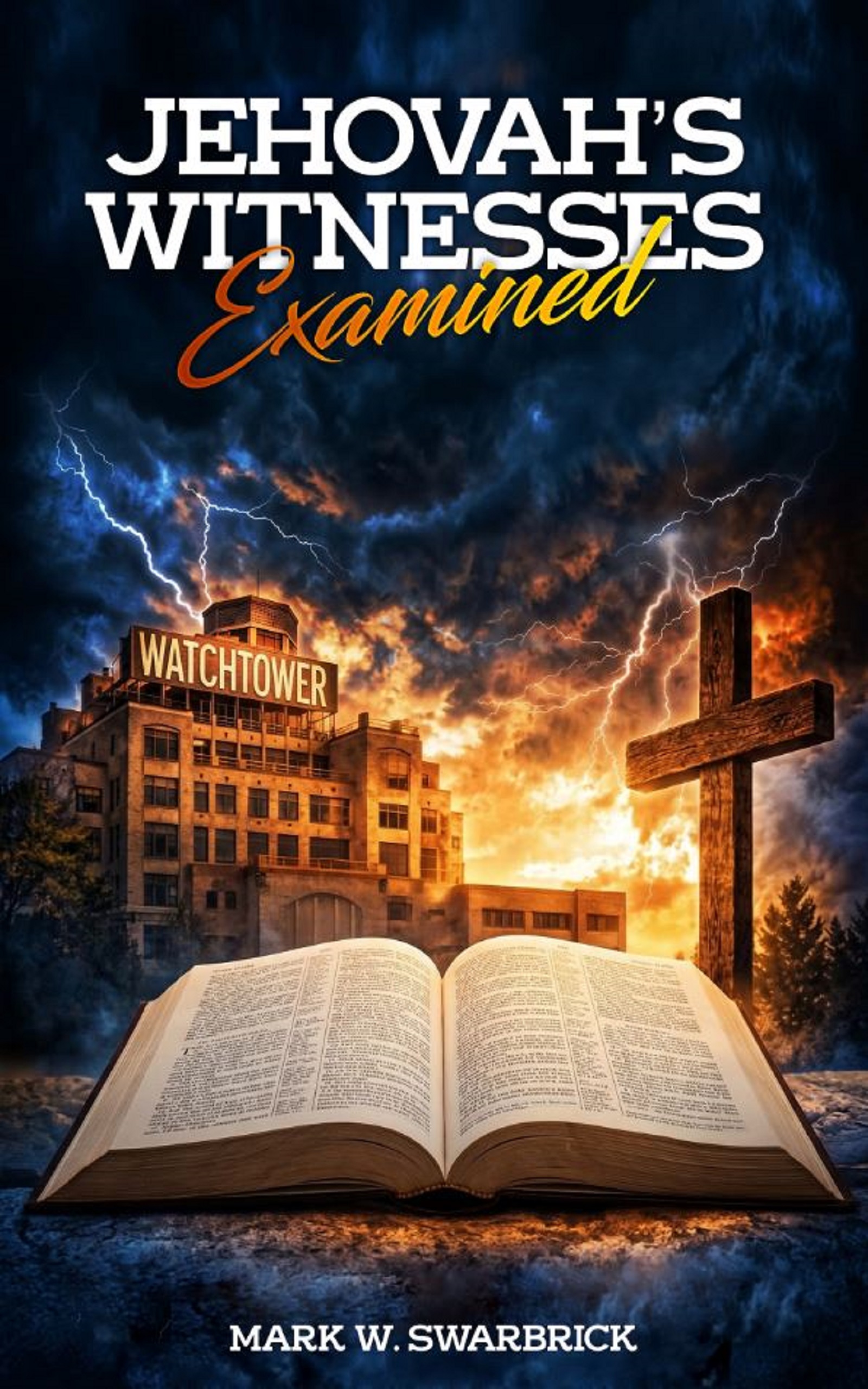
Jehovah’s Witnesses Examined
In Jehovah’s Witnesses Examined, author Mark W. Swarbrick carefully compares the doctrines of the Watchtower organization with the clear teaching of the Bible. This concise and readable book exposes the movement’s history, its controlling structure, and the serious doctrinal errors that separate it from historic Christianity.
Available in Paperback, Kindle eBook, and Audio Book. Only $3.99.
The Human Cost — Shunning, Control, and Broken Lives
Beyond doctrines, the culture of the organization harms people. The JW cult framework demands total loyalty: questioning leadership risks disfellowshipping, which triggers shunning by family and friends. Former members recount the grief of losing parents, children, and entire social worlds overnight. Medical prohibitions on blood transfusions have contributed to preventable tragedies. Many ex-Witnesses describe lingering anxiety, fear, and spiritual confusion long after leaving. By contrast, Christianity proclaims the grace of the true and living Christ — fully God and fully man — who frees sinners, restores consciences, and welcomes prodigals home.
Countless lives have been scarred by the practices of the Jehovah’s Witnesses. Former members speak of being torn from their families through harsh shunning policies, of marriages destroyed when one spouse left the movement, and of children estranged from parents because the church demanded it. Many live under constant fear that one wrong step will bring eternal destruction, while others grieve loved ones lost to the prohibition against blood transfusions. The result is not just theological error but broken homes, broken hearts, and lasting emotional trauma. In short, the JW cult embodies every destructive trait people think of when they hear the word cult — spiritual deception, authoritarian control, broken families, and ruined lives.
If you’re weighing Jehovah Witness versus Christianity, start with Jesus Himself. He is not a created helper but the eternal Son, worthy of worship, who died and rose to save. Our articles below explore the history, doctrines, and personal stories in greater depth — to equip you to discern truth, care for those caught in the system, and point them to the real Jesus.


 Global Warming: Socialism in Disguise