
Many Christians misunderstand the nature of the Gospel and what it means to follow Christ. Some have come to believe that being a Christian means never offending anyone, never challenging anyone’s beliefs, and never disagreeing with another person’s ideas. This form of Pollyannaish Christianity reduces the Gospel to little more than a social philosophy of polite niceties and perpetual pleasantness. Taken to its logical conclusion, this mindset can lead to the affirmation of virtually every religion, belief system, and lifestyle choice.
Others reduce Christianity to little more than getting someone to attend church and pray a sinner’s prayer. But is this really the message of the New Testament? The truth is that such attitudes often overlook important aspects of the Christian faith. An honest examination of Scripture reveals that becoming a Christian involves far more than merely adopting a religious label. The Gospel calls people to truths that are often uncomfortable, challenging, and, at times, deeply offensive to those who reject them.
In Galatians 5:11, the Apostle Paul speaks of “the offense of the cross.” Christians have long understood that the Gospel message is inherently offensive to many people. This should not surprise us. The Gospel declares that all men are sinners, that no amount of good works can earn God’s favor, that false religions cannot save, and that Jesus Christ is the only way to God. Many people do not appreciate being told that their beliefs are wrong, their religion is false, or that their actions are sinful and place them under the judgment of God. Such claims strike at human pride, challenge deeply held convictions, and confront people with truths they often do not want to hear.
In an age that prizes tolerance, inclusivity, and the idea that all paths lead to God, the exclusivity of the Gospel is more offensive than ever. Yet the offense of the cross is not a modern problem. Jesus offended the religious leaders of His day. The apostles offended idol worshipers, false teachers, and political authorities. Throughout the New Testament, faithful preaching repeatedly provoked opposition because truth has a way of exposing error, confronting sin, and calling people to repentance. Jesus acknowledged this truth when he said:
“Do not think that I have come to bring peace to the earth. I have not come to bring peace, but a sword. For I have come to set a man against his father, and a daughter against her mother, and a daughter-in-law against her mother-in-law. And a person’s enemies will be those of his own household. Whoever loves father or mother more than me is not worthy of me, and whoever loves son or daughter more than me is not worthy of me.” (Matthew 10:34-37)
Clearly, Jesus taught something far different from the worldly, watered-down version of Christianity embraced by many today. Our Lord calls us to stand for the truth, even when doing so alienates members of our own family. If faithfulness to Christ sometimes requires us to stand against those closest to us, then surely we must also be prepared to stand against the culture around us. We must be willing to oppose popular opinion and even government authorities when they demand that we compromise biblical truth. Throughout history, faithful Christians have often found themselves opposed by society and persecuted by political authorities. As we consider these facts, we must ask ourselves: Have we truly submitted to Christ and His teachings? Are we willing to stand for the Gospel when doing so costs us the approval of family, society, or government? Jesus said that those who place anything above Him are not worthy of Him.
Jesus said that “the world…hates me because I testify about it that its works are evil” and that “everyone who does wicked things hates the light.” He then warned His followers, “If the world hates you, know that it has hated me before it hated you.” Elsewhere, He declared, “Woe to you, when all people speak well of you…” (John 7:7; 3:20; 15:18; Luke 6:26) If our stand for Christ never brings opposition or even hatred from the world, we must search our hearts and ask whether we are truly standing with Him. We do well to remember the admonishon of James:
“You adulterous people! Do you not know that friendship with the world is enmity with God? Therefore whoever wishes to be a friend of the world makes himself an enemy of God.” (James 4:4)
We need to cultivate the boldness of Peter and John. When Peter and John were brought before the Sanhedrin, the highest religious authority in Israel, they were told to stop preaching the Gospel of Jesus Christ. They answered, “Whether it is right in the sight of God to listen to you rather than to God, you must judge, for we cannot but speak of what we have seen and heard.” (Acts 4:18-20)
Of course, none of this is easy. This is precisely why Jesus told those considering discipleship to count the cost. Following Christ was never presented as a path to comfort, popularity, or universal acceptance. Jesus asked, “For which of you, desiring to build a tower, does not first sit down and count the cost, whether he has enough to complete it?” He concluded, “So therefore, any one of you who does not renounce all that he has cannot be my disciple.” (Luke 14:28, 33)
The point is clear. Before a person commits himself to Christ, he should understand what discipleship may require. Following Jesus can cost a person friendships, family relationships, social standing, employment opportunities, and even personal freedom. Throughout history, many believers have paid a heavy price for their faith. Jesus never concealed these realities. Instead, He openly warned prospective disciples to count the cost before deciding whether they were willing to follow Him.
It behooves us to review how Jesus and the apostles presented the Gospel. First of all, they proclaimed that salvation is found in Christ alone. Christianity does not teach that Jesus is one path among many. It teaches that He is the only path. Jesus declared, “I am the way, the truth, and the life: no man cometh unto the Father, but by me” (John 14:6). Peter echoed this truth when he proclaimed, “There is salvation in no one else, for there is no other name under heaven given among men by which we must be saved” (Acts 4:12). 1 John 5:12 says, “Whoever has the Son has life; whoever does not have the Son of God does not have life.” The Apostle Paul warned that a day of judgment is coming for those who do not obey the Gospel, saying:
“The Lord Jesus is revealed from heaven with his mighty angels in flaming fire, inflicting vengeance on those who do not know God and on those who do not obey the gospel of our Lord Jesus” (2 Thessalonians 1:8).
This is a far cry from saying that good, sincere Buddhists or Muslims are going to heaven. The apostles did not preach religious pluralism; they preached repentance and faith in Jesus Christ as the only hope of salvation.
Our culture insists that all religions are equally valid and that every sincere spiritual path ultimately leads to God. The Gospel rejects that idea completely. If Jesus is the only way to the Father, then every religion that denies that He is the divine Son of God is mistaken. If salvation is found only in Christ, then all competing paths ultimately fail to lead where they promise. The apostles did not shrink from proclaiming this truth.
Paul did not arrive in Athens and congratulate the Greeks for finding their own way to God. Scripture tells us that Paul’s “spirit was provoked within him as he saw that the city was full of idols” (Acts 17:16). This is the proper response. All the world’s religions are idolatry. If we believe that truth, then seeing multitudes following a path that leads to hell should provoke a response within us. Paul was grieved by the city’s idols and called its people to repentance, saying to the Athenians, “We ought not to think that the divine being is like gold or silver or stone, an image formed by the art and imagination of man…now he commands all people everywhere to repent, because he has fixed a day on which he will judge the world” (Acts 17:29-31). Paul went even further in 1 Corinthians 10:20, where he wrote that the things pagans sacrificed to idols were offered “to demons, and not to God.”
In Lystra, Paul and Barnabas urged the people to turn from their pagan gods, calling them “vain things.” In Ephesus, Paul’s preaching became so effective that the idol makers feared for their livelihood and incited a riot. Their complaint was simple: “This Paul has persuaded and turned away a great many people, saying that gods made with hands are not gods.” (Acts 19:26).
No doubt these worshippers of the fertility goddess Diana were sincere. The Temple of Diana at Ephesus was one of the Seven Wonders of the Ancient World. Built of gleaming marble and supported by more than a hundred massive columns, it attracted pilgrims from throughout the Roman Empire. The city’s economy was closely tied to the worship of Diana. Merchants sold idols and religious souvenirs, craftsmen earned their living from the trade, and countless citizens regarded the goddess as the protector of their city. Her worship was woven into the very fabric of Ephesian society.
Yet none of this caused Paul to soften his message. He did not excuse their idolatry because it was ancient, culturally accepted, or sincerely held. Nor did he refrain from preaching the truth because it threatened established traditions or powerful economic interests. Instead, he boldly proclaimed that man-made gods were no gods at all. The result was outrage, opposition, and eventually a riot. Paul’s companions, Gaius and Aristarchus, were seized by the mob and dragged into the city’s theater. There, for about two hours, the crowd shouted in unison, “Great is Diana of the Ephesians!” (Acts 19:29, 34). Throughout his ministry, Paul endured beatings, imprisonment, stoning, rejection, and constant persecution because he refused to compromise the Gospel. Yet he continued preaching.
And what was the result? Years later Paul addressed the believers in Ephesus with these words: “To the saints who are in Ephesus, and are faithful in Christ Jesus” (Ephesians 1:1). This was the fruit of his boldness. Once the city had been known throughout the Roman Empire for its devotion to Diana and her magnificent temple. Yet the Gospel transformed Ephesus into one of the great centers of early Christianity. Timothy ministered there. The Apostle John is believed to have spent his later years there. The church at Ephesus became one of the seven churches addressed by Christ in the book of Revelation. Jesus told John to write to the Church in Ephesus and deliver this message from Him, “‘I know your works, your toil and your patient endurance, and how you cannot bear with those who are evil, but have tested those who call themselves apostles and are not, and found them to be false.” The city that once echoed with cries of “Great is Diana of the Ephesians!” became known for a thriving Christian witness.
Did Paul do the right thing? His preaching disrupted the city’s economy, challenged its most cherished traditions, and sparked a riot. Many no doubt considered him intolerant, divisive, and dangerous. History has rendered a different verdict. Because Paul refused to compromise, countless Ephesians turned from idolatry to Christ and found eternal life. Today they are in heaven rather than hell because someone loved them enough to confront their false religion and proclaim the Gospel. That is the fruit of speaking the truth, no matter the cost. Paul’s example reminds us that sincerity does not transform falsehood into truth. The Gospel calls men to repent of error and turn to the living God, no matter how deeply entrenched those errors may be in a culture.
Outlawing the Gospel
Before proceeding, we must recognize an important truth: the Gospel cannot be preached without confronting sin and false religion. Jesus called men to repent. The apostles called men to repent. Throughout the book of Acts, the apostles challenged idolatry, religious error, and sinful behavior wherever they encountered it. Unfortunately, laws are being enacted in Europe that hinder preaching against sexual sin. To forbid Christians from speaking against sin is not merely to restrict one aspect of Christianity; it is to silence a central part of the Gospel itself. A Gospel that cannot identify sin and expose error is not the Gospel found in Scripture.
This is not a minor issue. Throughout church history, faithful pastors have not only proclaimed salvation through Jesus Christ but have also warned their congregations about false religions and cults. The apostles repeatedly exposed religious error. Paul warned against false gospels. John warned against antichrists and false teachers. Jesus Himself openly rebuked the Pharisees, Sadducees, and other religious leaders for leading people astray. Stephen accused Israel’s leaders of resisting the Holy Spirit and murdering God’s prophets. They responded by stoning him to death. Peter stood before the crowds in Jerusalem and declared that they had crucified their own Messiah. Paul traveled throughout the Roman Empire denouncing idols and false gods. Everywhere the apostles went, they proclaimed truths that many people did not want to hear. The Bible does not treat all religions as equally valid paths to God. Rather, it repeatedly contrasts truth with error and calls believers to reject false teaching.
Likewise, preaching against sin has always been a central part of the Christian message. John the Baptist publicly condemned the sexual immorality of King Herod. Jesus called sinners to repentance. Paul listed specific sins that separate people from God and warned that those who practice such things will not inherit the kingdom of God unless they repent. For two thousand years, pastors have faithfully followed this biblical pattern by preaching against adultery, fornication, homosexuality, drunkenness, greed, and every other form of sin condemned in Scripture.
The problem now facing Christians in modern Britain is that two of the subjects most frequently addressed in Scripture have effectively been placed beyond criticism. A pastor may face legal consequences for publicly condemning homosexual behavior as sinful or for criticizing the teachings of Islam. Yet both subjects are addressed directly in the Bible and have historically been part of faithful Christian preaching. When the state declares that certain sins may not be identified as sin and certain religions may not be examined or criticized, it is no longer merely regulating speech. It is restricting the proclamation of biblical truth itself.
Such a system cannot honestly be described as freedom of speech, for genuine free speech includes the right to express unpopular religious, moral, and political views without fear of government punishment. In practical terms, this means that pastors are increasingly prevented from preaching the whole counsel of God. A gospel stripped of repentance, stripped of warnings about sin, and stripped of any critique of false religion is not the gospel preached by Jesus, the apostles, or the early church. It is a truncated message, altered to conform to modern cultural sensitivities rather than biblical authority.
The implications extend far beyond Christianity. Freedom of speech is tested not by protecting popular opinions but by protecting unpopular ones. If the government can prohibit Christians from publicly expressing what the Bible teaches about certain sins or from criticizing other religions, then freedom of speech has already been significantly curtailed. A free society allows ideas to be challenged, debated, defended, and rejected in the marketplace of ideas. It does not place particular beliefs, behaviors, or religions beyond criticism. Once the state begins deciding which viewpoints may be publicly expressed and which may not, genuine freedom of expression is already being curtailed.
The extent of these restrictions on free speech is reflected in recent arrest statistics. According to reports published by The Times of London, British police made more than 12,000 arrests in a single year for social media comments deemed offensive under the country’s speech laws. That amounts to approximately thirty arrests per day. Such figures illustrate how aggressively these laws are being enforced.
They also reveal a deeper spiritual reality. Faced with increasing government pressure, legal restrictions, and the threat of public condemnation, much of the church has retreated from boldly proclaiming the full counsel of God. As Christian influence has receded, secular authorities and worldly ideologies have steadily advanced to fill the void. Truths once preached openly from British pulpits are now treated as offensive, while beliefs and behaviors that contradict Scripture receive growing legal and cultural protection. The result is a striking reversal of Britain’s Christian heritage. Consequently, the church has increasingly withdrawn in the face of mounting pressure, while the world has continued its relentless advance.
A Modern-Day Paul
It is against this backdrop that we encounter a modern-day Paul, Pastor Steve Maile, a man whose willingness to fearlessly proclaim the Gospel brought him into direct conflict with the culture around him. The treatment he received shocked Christians around the world. While publicly sharing his message, the sixty-six-year-old pastor of Oasis City Church in Watford was suddenly surrounded by police officers. The police officers rushed him without warning, forced his arms behind his back, and secured him in double handcuffs so tightly that his wrists were injured. During the interview conducted shortly afterward, bandages could still be seen covering his wrists from the ordeal.
The treatment did not end there. Maile was taken to one police station and then transferred to another, where he was held for approximately twelve hours, denied access to a restroom for an extended period despite repeated requests, and eventually placed in a jail cell. He still faces legal proceedings connected to accusations that his preaching constituted hate speech. As of this writing, he remains under the threat of criminal penalties for publicly proclaiming beliefs that Christians have preached for centuries.
The striking fact is that Maile was not advocating violence, threatening anyone, or inciting a riot. He was preaching the Gospel. He was declaring that Jesus Christ is the only way of salvation, calling sinners to repentance, and urging Muslims and others to place their faith in Christ. In previous generations, such preaching would have been recognized as ordinary Christian evangelism. In modern Britain, it resulted in handcuffs, imprisonment, and criminal charges.
Like the Apostle Paul in the book of Acts, Maile was not arrested for violence, theft, or rioting. He was preaching the same message Christians have proclaimed for two thousand years: that Jesus Christ is the only way of salvation and that all people, regardless of their background, must repent and believe the Gospel. He declared that Muslims, atheists, agnostics, LGBT individuals, and people of every race and religion stand on equal ground before God. None receive a free pass, yet all are invited to receive God’s grace through faith in Jesus Christ.
Many today regard such preaching as offensive, but Maile was not proclaiming a new doctrine or an extreme position. He was repeating the same Gospel that has been preached by faithful Christians since the first century. Throughout church history, believers have proclaimed that salvation is found in Christ alone and have called people of every religion, culture, and background to repent and place their faith in Him. What made Maile’s message controversial was not that it departed from historic Christianity, but that it faithfully reflected it.
Nor should Christians be intimidated into silence when discussing Islam. Every religion, ideology, and worldview is subject to public examination and criticism. Islam is not merely a private spiritual belief system. Historically, it has often been intertwined with political power, military conquest, and the expansion of Islamic rule. From the early Islamic conquests of the seventh and eighth centuries to the Ottoman Empire’s advance into Europe, the spread of Islam has frequently involved both religious and political objectives, often implemented by military force. These historical realities are matters of record and should not be treated as forbidden topics.
Modern Britain has additional reasons for concern. In recent decades, the nation has experienced terrorist attacks carried out in the name of Islam, the exposure of large-scale grooming gang scandals involving predominantly Muslim perpetrators in several cities, and growing tensions surrounding immigration, integration, and religious accommodation. To discuss these issues is not hatred. It is participation in an important public conversation about the future of British society.
None of this means that all Muslims are violent or that individual Muslims should be treated with hostility. Christians are commanded to love their neighbors and share the Gospel with all people. Yet love does not require silence. Because Christians know that salvation is found only in Jesus Christ and that eternal destinies are at stake, warning people about false religion is not an act of hatred but an act of love and compassion.
Likewise, pastors have always addressed social, moral, and public issues that affect the well-being of their communities. When religious beliefs, cultural trends, or political policies are harming society, silence is not a virtue but a failure of moral responsibility. John the Baptist publicly rebuked Herod for his sinful conduct and was imprisoned for it. The Apostle Paul challenged pagan beliefs throughout the Roman Empire, called people to repentance, and pointed them to Christ as the only Savior. Faithful Christian leaders have never confined themselves to private spirituality. They have consistently spoken God’s truth to both individuals and society.
In that sense, Pastor Steve Maile was doing exactly what faithful Christian preachers have done for centuries. He deserves our encouragement and prayerful support. Like Paul before him, he proclaimed an unpopular message in a culture increasingly hostile to historical truth and biblical Christianity. It is worth remembering how Christ Himself dealt with religious error. He publicly rebuked the Pharisees, exposed their hypocrisy before the crowds, warned them of coming judgment, called them blind guides, fools, whitewashed tombs, and a generation of vipers.
He drove the money changers from the Temple, chasing them out, lashing at them with a whip while overturning their tables in righteous anger. Any who think such forceful condemnation of religious error is inherently “wicked” or “unchristian” would most likely have turned their backs on Christ when He publicly declared to the Pharisees, “You serpents, you generation of vipers, how can you escape the damnation of hell?” (Matthew 23:33). Indeed, if Christ were to publicly repeat many of His own words in modern Britain, He would likely find Himself accused of the very speech crimes now being used against Christian preachers. Whether one agrees with Maile’s conclusions or not, the notion that such preaching should be met with handcuffs rather than debate ought to concern anyone who values religious liberty and freedom of speech.
The Christian faith has never advanced by eliminating the offense of the cross. It advances when believers faithfully proclaim the truth despite the offense. A message that never convicts, never challenges, never confronts sin, never exposes false religion, and never provokes opposition may be many things, but it is not the message that Jesus and the apostles preached. Paul understood this nearly two thousand years ago. If the offense disappears, something essential has been lost. As he wrote to the Galatians, “Then the offense of the cross has ceased.”
Have a Question or Insight? Join the Discussion — To Comment, Scroll to the Bottom. Please Be Courteous and Stay on Topic.
Books by Mark Swarbrick
 For more information on Jimmy Swaggart Ministries, get my book, Swaggartism: The Strange Doctrines of Jimmy Swaggart Ministries, available now on Amazon in paperback, Kindle eBook, and audio book, starting at only $6.99. For information click HERE.
Available in Paperback and Kindle eBook – 266 pages of documented facts!
For more information on Jimmy Swaggart Ministries, get my book, Swaggartism: The Strange Doctrines of Jimmy Swaggart Ministries, available now on Amazon in paperback, Kindle eBook, and audio book, starting at only $6.99. For information click HERE.
Available in Paperback and Kindle eBook – 266 pages of documented facts!


 Seventh-Day Adventism Examined: A Concise Summary of Adventism's Unbiblical Doctrines
Author Mark Swarbrick meticulously dissects the myriad of false teachings within Adventism, contrasting these interpretations with scriptural truth.
Available in Paperback, Kindle eBook, and Audio Book. Only $3.99 - Click HERE to purchase at Amazon.
Seventh-Day Adventism Examined: A Concise Summary of Adventism's Unbiblical Doctrines
Author Mark Swarbrick meticulously dissects the myriad of false teachings within Adventism, contrasting these interpretations with scriptural truth.
Available in Paperback, Kindle eBook, and Audio Book. Only $3.99 - Click HERE to purchase at Amazon.
 The Pre-Trib Rapture: Biblical Truth of the Blessed Hope
In his book, The Pre-Trib Rapture, author Mark Swarbrick meticulously outlines the extensive biblical support for a Pre-Trib Rapture, emphasizing the deliverance of the Church before the onset of the impending Tribulation period.
Available in Paperback, Kindle eBook, and Audio Book. Only $3.99 - Click HERE to purchase at Amazon.
The Pre-Trib Rapture: Biblical Truth of the Blessed Hope
In his book, The Pre-Trib Rapture, author Mark Swarbrick meticulously outlines the extensive biblical support for a Pre-Trib Rapture, emphasizing the deliverance of the Church before the onset of the impending Tribulation period.
Available in Paperback, Kindle eBook, and Audio Book. Only $3.99 - Click HERE to purchase at Amazon.
 Hidden History: The Untold Story of the Democratic Party
The political narrative in America has transcended the realm of politics to become a battle between the forces of good and evil. It is essential that all Christians are informed on the anti-Christian direction of the Democratic Party.
200 pages of factual history! Available in Paperback, Kindle eBook, and Audio Book. Only $3.99 - Click HERE to purchase at Amazon.
Hidden History: The Untold Story of the Democratic Party
The political narrative in America has transcended the realm of politics to become a battle between the forces of good and evil. It is essential that all Christians are informed on the anti-Christian direction of the Democratic Party.
200 pages of factual history! Available in Paperback, Kindle eBook, and Audio Book. Only $3.99 - Click HERE to purchase at Amazon.
 The Covid Conspiracy: The Cure for Covid and the Plot to Hide it from the World
The Covid Conspiracy tells the incredible story of diabolical collusion between multinational drug companies, governmental regulatory agencies, and unscrupulous politicians.
Available in Paperback, Kindle eBook, and Audio Book. Only $2.99 - Click HERE to purchase at Amazon.
The Covid Conspiracy: The Cure for Covid and the Plot to Hide it from the World
The Covid Conspiracy tells the incredible story of diabolical collusion between multinational drug companies, governmental regulatory agencies, and unscrupulous politicians.
Available in Paperback, Kindle eBook, and Audio Book. Only $2.99 - Click HERE to purchase at Amazon.
 The Carnivore Diet: The Science, the Promise, and the Pitfalls
Author Mark Swarbrick thoroughly explains the diet, telling of his experiences with it and how it has radically improved his health in a short amount of time. One chapter deals with the current war on meat and what the Bible has to say about those who forbid eating meat.
Available in Paperback, Kindle eBook, and Audio Book. Only $2.99 - Click HERE to purchase at Amazon.
The Carnivore Diet: The Science, the Promise, and the Pitfalls
Author Mark Swarbrick thoroughly explains the diet, telling of his experiences with it and how it has radically improved his health in a short amount of time. One chapter deals with the current war on meat and what the Bible has to say about those who forbid eating meat.
Available in Paperback, Kindle eBook, and Audio Book. Only $2.99 - Click HERE to purchase at Amazon.
 Heavenly Miracles: True Stories of Supernatural Intervention
When the author saw how demons flee at the name of Jesus, his growing faith resulted in numerous miracles in his life and ministry.
Available in Paperback, Kindle eBook, and Audio Book. Only $2.99 - Click HERE to purchase at Amazon.
Heavenly Miracles: True Stories of Supernatural Intervention
When the author saw how demons flee at the name of Jesus, his growing faith resulted in numerous miracles in his life and ministry.
Available in Paperback, Kindle eBook, and Audio Book. Only $2.99 - Click HERE to purchase at Amazon.
 King James Onlyism: Is the KJV the Best Bible Version?
KJV Onlyists have troubled the hearts of many a Christianand have split churches in half. Controversy, factions, and strive are their forte. No doubt, they are sincere, but they are sincerely wrong.
Available in Paperback, Kindle eBook, and Audio Book. Only $2.99 - Click HERE to purchase at Amazon.
King James Onlyism: Is the KJV the Best Bible Version?
KJV Onlyists have troubled the hearts of many a Christianand have split churches in half. Controversy, factions, and strive are their forte. No doubt, they are sincere, but they are sincerely wrong.
Available in Paperback, Kindle eBook, and Audio Book. Only $2.99 - Click HERE to purchase at Amazon.

 The Hidden Truth about Catholicism
If you are a Catholic this book is for you. With loving respect, this book gives a detailed account of the history of Catholicism with an in-depth analysis of Catholic teachings.
Available in Paperback, Kindle eBook, and Audio Book. Only $2.99 - Click HERE to purchase at Amazon.
The Hidden Truth about Catholicism
If you are a Catholic this book is for you. With loving respect, this book gives a detailed account of the history of Catholicism with an in-depth analysis of Catholic teachings.
Available in Paperback, Kindle eBook, and Audio Book. Only $2.99 - Click HERE to purchase at Amazon.
 Life after Death: What Happens When We Die?
A refutation of soul sleep, the idea that people are unconscious or nonexistent until God raises their bodies from the dead at the resurrection.
Available in Paperback, Kindle eBook, and Audio Book. Only $2.99 - Click HERE to purchase at Amazon.
Life after Death: What Happens When We Die?
A refutation of soul sleep, the idea that people are unconscious or nonexistent until God raises their bodies from the dead at the resurrection.
Available in Paperback, Kindle eBook, and Audio Book. Only $2.99 - Click HERE to purchase at Amazon.
 Mormonism Examined: The Bizarre History and Unbiblical Doctrines of Mormonism
This is not an anti-Mormon rant, but a thoughtful analysis of Mormonism in the light of the Holy Bible and historic Christian doctrine.
Available in Paperback, Kindle eBook, and Audio Book. Only $4.99 - Click HERE to purchase at Amazon.
Mormonism Examined: The Bizarre History and Unbiblical Doctrines of Mormonism
This is not an anti-Mormon rant, but a thoughtful analysis of Mormonism in the light of the Holy Bible and historic Christian doctrine.
Available in Paperback, Kindle eBook, and Audio Book. Only $4.99 - Click HERE to purchase at Amazon.
 Truly Amazing: The Real Story of Adam and Eve
Children get bombarded with confusion about gender, marriage, and evolution at a very young age.This book shows what God has to say on these crucial matters. This book is a creation story for kids that explains the creation and the fall in an interesting way that children can relate to.
Available in Paperback, Kindle eBook, and Audio Book. Only $2.99 - Click HERE to purchase at Amazon.
Truly Amazing: The Real Story of Adam and Eve
Children get bombarded with confusion about gender, marriage, and evolution at a very young age.This book shows what God has to say on these crucial matters. This book is a creation story for kids that explains the creation and the fall in an interesting way that children can relate to.
Available in Paperback, Kindle eBook, and Audio Book. Only $2.99 - Click HERE to purchase at Amazon.
 Global Warming: Socialism in Disguise
In "Global Warming Examined," Mark Swarbrick compellingly illustrates how genuine scientific data contradicts the prevalent political narrative of an imminent climate crisis. Drawing on insights from esteemed scientists, he dismantles the fallacious belief in man-made global warming as a cataclysmic threat.
Available in Paperback, Kindle eBook, and Audio Book. Only $3.99 - Click HERE to purchase at Amazon.
Global Warming: Socialism in Disguise
In "Global Warming Examined," Mark Swarbrick compellingly illustrates how genuine scientific data contradicts the prevalent political narrative of an imminent climate crisis. Drawing on insights from esteemed scientists, he dismantles the fallacious belief in man-made global warming as a cataclysmic threat.
Available in Paperback, Kindle eBook, and Audio Book. Only $3.99 - Click HERE to purchase at Amazon.
 Beyond Redemption: Love and Longing in the Old West (Book 1)
A thrilling historical western and romance packed with Gospel truth. A perfect gift for someone you want to share the Gospel with. Here is what one reader said about Beyond Redemption:
“THIS READ IS A GRIPPING JOURNEY back in time to the rugged Wild West, where love, justice, and redemption entwine in a tale that will leave you captivated. Author Mark Swarbrick skillfully weaves historical detail into this action-packed narrative, giving readers an authentic and suspenseful experience. The story revolves around Cal Chandler, an unlikely outlaw forced into a life of crime, and his love for Jessica Lorena McKenzie, a devout Christian, creating a captivating clash of faiths and emotions. For fans of historical depth, “Beyond Redemption” is a must-read that brings the people of the Wild West to life as they truly were." — Jerry Rubenstein
Beyond Redemption: Love and Longing in the Old West (Book 1)
A thrilling historical western and romance packed with Gospel truth. A perfect gift for someone you want to share the Gospel with. Here is what one reader said about Beyond Redemption:
“THIS READ IS A GRIPPING JOURNEY back in time to the rugged Wild West, where love, justice, and redemption entwine in a tale that will leave you captivated. Author Mark Swarbrick skillfully weaves historical detail into this action-packed narrative, giving readers an authentic and suspenseful experience. The story revolves around Cal Chandler, an unlikely outlaw forced into a life of crime, and his love for Jessica Lorena McKenzie, a devout Christian, creating a captivating clash of faiths and emotions. For fans of historical depth, “Beyond Redemption” is a must-read that brings the people of the Wild West to life as they truly were." — Jerry Rubenstein
Available in Paperback, Kindle eBook, and Audio Book. Only $6.99 - Click HERE to purchase at Amazon.
 Beyond Redemption: War & Peace in the Old West (Book 2)
The Second Book in the Beyond Redemption series. How the characters prayerfully deal with their challenges is a testament to the changing power of the Gospel of Jesus Christ.
Available in Paperback, Kindle eBook, and Audio Book. Only $9.99 - Click HERE to purchase.
Beyond Redemption: War & Peace in the Old West (Book 2)
The Second Book in the Beyond Redemption series. How the characters prayerfully deal with their challenges is a testament to the changing power of the Gospel of Jesus Christ.
Available in Paperback, Kindle eBook, and Audio Book. Only $9.99 - Click HERE to purchase.
 Beyond Redemption: Joy and Suffering in the Old West (Book 3)
The Third Book in the Beyond Redemption series. Life on the Arizona frontier is never without hardship. Unexpected trials test the faith of Cal and Lorena and threaten those they love.
Available in Paperback, Hardback, Kindle eBook, and Audio Book. Only $9.99 - Click HERE to purchase.
Beyond Redemption: Joy and Suffering in the Old West (Book 3)
The Third Book in the Beyond Redemption series. Life on the Arizona frontier is never without hardship. Unexpected trials test the faith of Cal and Lorena and threaten those they love.
Available in Paperback, Hardback, Kindle eBook, and Audio Book. Only $9.99 - Click HERE to purchase.
 Abducted by Demons - Saved by Jesus: My Journey for Hell to Heaven
Join Mark Swarbrick on a heart-wrenching journey from the depths of demonic oppression to the transformative peace and salvation found in Christ.
Available in Paperback, Kindle eBook, and Audio Book. Only $3.99 - Click HERE to purchase at Amazon.
Abducted by Demons - Saved by Jesus: My Journey for Hell to Heaven
Join Mark Swarbrick on a heart-wrenching journey from the depths of demonic oppression to the transformative peace and salvation found in Christ.
Available in Paperback, Kindle eBook, and Audio Book. Only $3.99 - Click HERE to purchase at Amazon.
 Fossil Fuels – God’s Gift to Man: How God used Coal, Oil, and Natural Gas to Save Mankind
In this eye-opening book, Mark Swarbrick challenges the prevailing narrative surrounding fossil fuels and climate change, showing that coal, oil, and natural gas are not environmental villains, but rather divine provisions strategically placed by God to sustain humanity's growing population.
Available in Paperback, Kindle eBook, and Audio Book. Only $3.99 - Click HERE to purchase.
Fossil Fuels – God’s Gift to Man: How God used Coal, Oil, and Natural Gas to Save Mankind
In this eye-opening book, Mark Swarbrick challenges the prevailing narrative surrounding fossil fuels and climate change, showing that coal, oil, and natural gas are not environmental villains, but rather divine provisions strategically placed by God to sustain humanity's growing population.
Available in Paperback, Kindle eBook, and Audio Book. Only $3.99 - Click HERE to purchase.
 Word of Faith Examined: A Refutation of the Prosperity Gospel's Unbiblical Doctrines
In this bold and timely book, pastor and author Mark Swarbrick exposes the dangers and distortions at the heart of the Word of Faith movement, also known as the “Name-it-and-Claim-it” or “Health and Wealth Gospel.”
Available in Paperback, Kindle eBook, and Audio Book. Only $3.99 - Click HERE to purchase.
Word of Faith Examined: A Refutation of the Prosperity Gospel's Unbiblical Doctrines
In this bold and timely book, pastor and author Mark Swarbrick exposes the dangers and distortions at the heart of the Word of Faith movement, also known as the “Name-it-and-Claim-it” or “Health and Wealth Gospel.”
Available in Paperback, Kindle eBook, and Audio Book. Only $3.99 - Click HERE to purchase.
 The Israel of God: A Christian and Biblical Perspective of the Modern State of Israel
Author Mark Swarbrick delivers a clear, biblically grounded exploration of Israel’s unique place in God’s redemptive plan—past, present, and future.
Available in Paperback, Kindle eBook, and Audio Book. Only $3.99 – Click HERE to purchase at Amazon.
The Israel of God: A Christian and Biblical Perspective of the Modern State of Israel
Author Mark Swarbrick delivers a clear, biblically grounded exploration of Israel’s unique place in God’s redemptive plan—past, present, and future.
Available in Paperback, Kindle eBook, and Audio Book. Only $3.99 – Click HERE to purchase at Amazon.
 Extraterrestrials Exposed: The Scientific and Biblical Evidence of a Grand Deception
Drawing on extensive research, author Mark Swarbrick uncovers how claims of alien encounters, UFO sightings, and government disclosures may not be what they seem. He presents a thought-provoking analysis that combines scientific inquiry with biblical teachings, suggesting that what many perceive as alien phenomena could actually be a sophisticated ruse designed to mislead humanity.
Available in Paperback, Kindle eBook, and Audio Book. Only $2.99 – Click
HERE
to purchase at Amazon.
Extraterrestrials Exposed: The Scientific and Biblical Evidence of a Grand Deception
Drawing on extensive research, author Mark Swarbrick uncovers how claims of alien encounters, UFO sightings, and government disclosures may not be what they seem. He presents a thought-provoking analysis that combines scientific inquiry with biblical teachings, suggesting that what many perceive as alien phenomena could actually be a sophisticated ruse designed to mislead humanity.
Available in Paperback, Kindle eBook, and Audio Book. Only $2.99 – Click
HERE
to purchase at Amazon.
 Socialism Examined: Man's Secular Answer to a Spiritual Problem
Author Mark Swarbrick explains, in simple terms, why socialism conflicts with biblical truth and why it consistently harms the very people it claims to help. You will learn how modern political leaders use fear, crisis, and entitlement to push a country toward greater state control — and why many don’t recognize it until it’s too late.
Available in Paperback, Kindle eBook, and Audio Book. Only $3.99 – Click
HERE
to purchase at Amazon.
Socialism Examined: Man's Secular Answer to a Spiritual Problem
Author Mark Swarbrick explains, in simple terms, why socialism conflicts with biblical truth and why it consistently harms the very people it claims to help. You will learn how modern political leaders use fear, crisis, and entitlement to push a country toward greater state control — and why many don’t recognize it until it’s too late.
Available in Paperback, Kindle eBook, and Audio Book. Only $3.99 – Click
HERE
to purchase at Amazon.
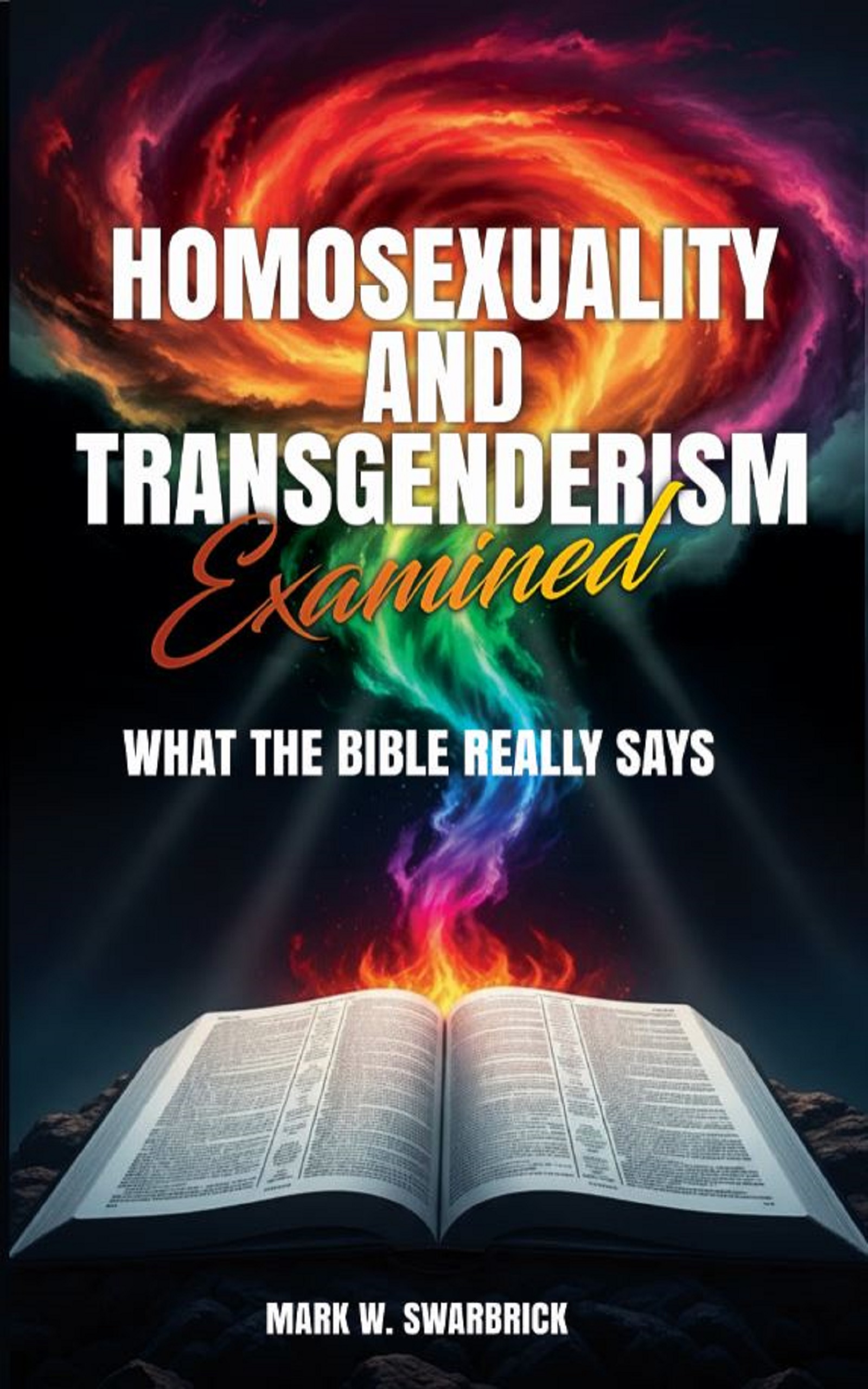 Homosexuality and Transgenderism Examined: What the Bible Really Says
Author Mark Swarbrick covers the key biblical passages on homosexuality and transgenderism, showing what Scripture teaches and how those teachings shaped Western moral order for nearly two millennia before being rejected in our time.
Available in Paperback, Kindle eBook, and Audio Book. Only $3.99 – Click
HERE
to purchase at Amazon.
Homosexuality and Transgenderism Examined: What the Bible Really Says
Author Mark Swarbrick covers the key biblical passages on homosexuality and transgenderism, showing what Scripture teaches and how those teachings shaped Western moral order for nearly two millennia before being rejected in our time.
Available in Paperback, Kindle eBook, and Audio Book. Only $3.99 – Click
HERE
to purchase at Amazon.
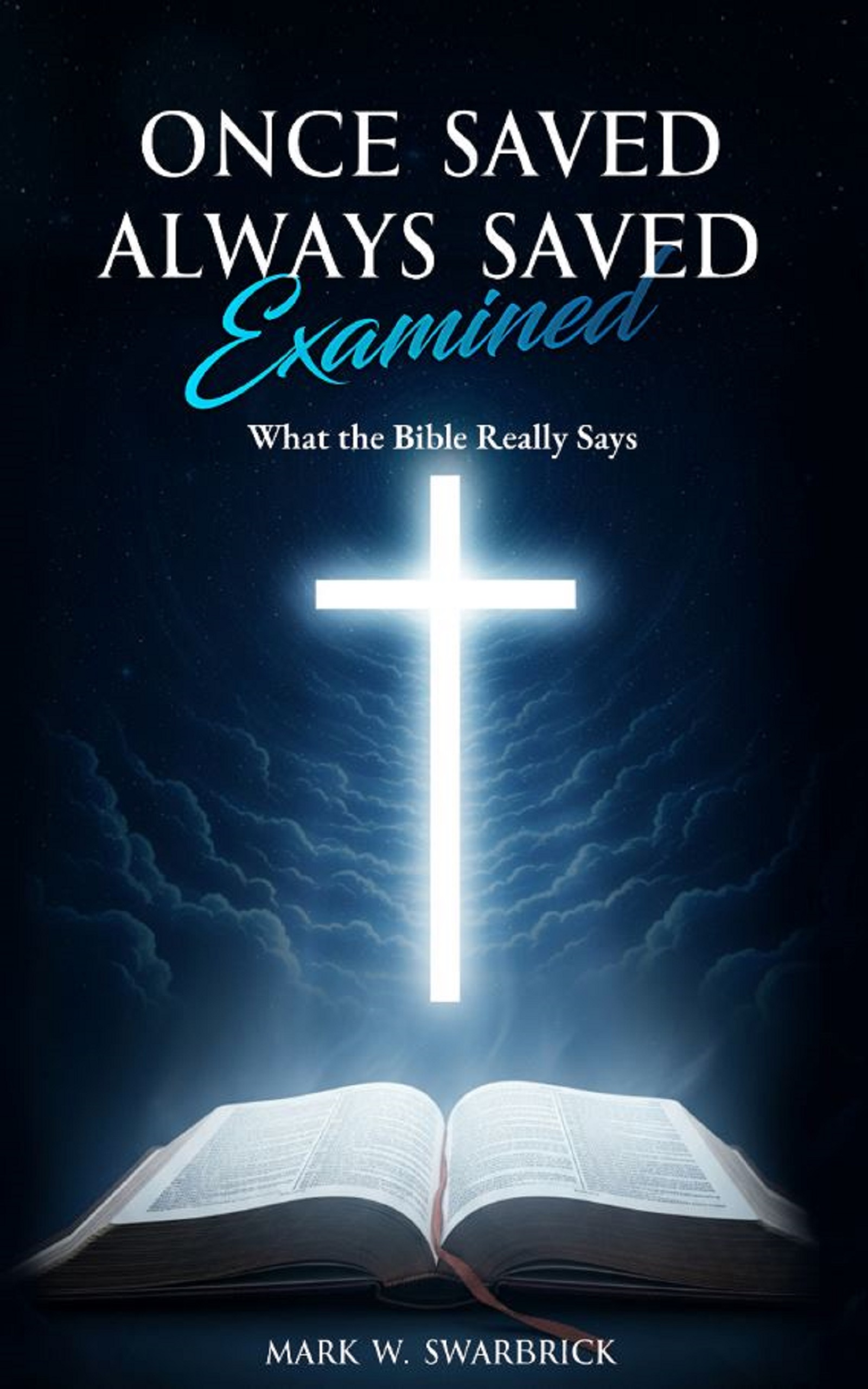 Once Saved Always Saved Examined: What the Bible Really Says
Author Mark Swarbrick covers the key biblical passages on unconditional security, showing what Scripture teaches and how the early Christian Church understood this important topic.
Available in Paperback, Kindle eBook, and Audio Book. Only $3.99 – Click
HERE
to purchase at Amazon.
Once Saved Always Saved Examined: What the Bible Really Says
Author Mark Swarbrick covers the key biblical passages on unconditional security, showing what Scripture teaches and how the early Christian Church understood this important topic.
Available in Paperback, Kindle eBook, and Audio Book. Only $3.99 – Click
HERE
to purchase at Amazon.
 The Mysterious Disappearance of Amelia Earhart Solved
Author Mark Swarbrick, a pilot trained at the University of Illinois Institute of Aviation and a licensed HAM radio operator, draws on his knowledge of cross-country navigation, aircraft performance, and shortwave radio to bring technical clarity to one of aviation’s greatest mysteries.
Available in Paperback, Kindle eBook, and Audio Book. Only $3.99 – Click
HERE
to purchase at Amazon.
The Mysterious Disappearance of Amelia Earhart Solved
Author Mark Swarbrick, a pilot trained at the University of Illinois Institute of Aviation and a licensed HAM radio operator, draws on his knowledge of cross-country navigation, aircraft performance, and shortwave radio to bring technical clarity to one of aviation’s greatest mysteries.
Available in Paperback, Kindle eBook, and Audio Book. Only $3.99 – Click
HERE
to purchase at Amazon.
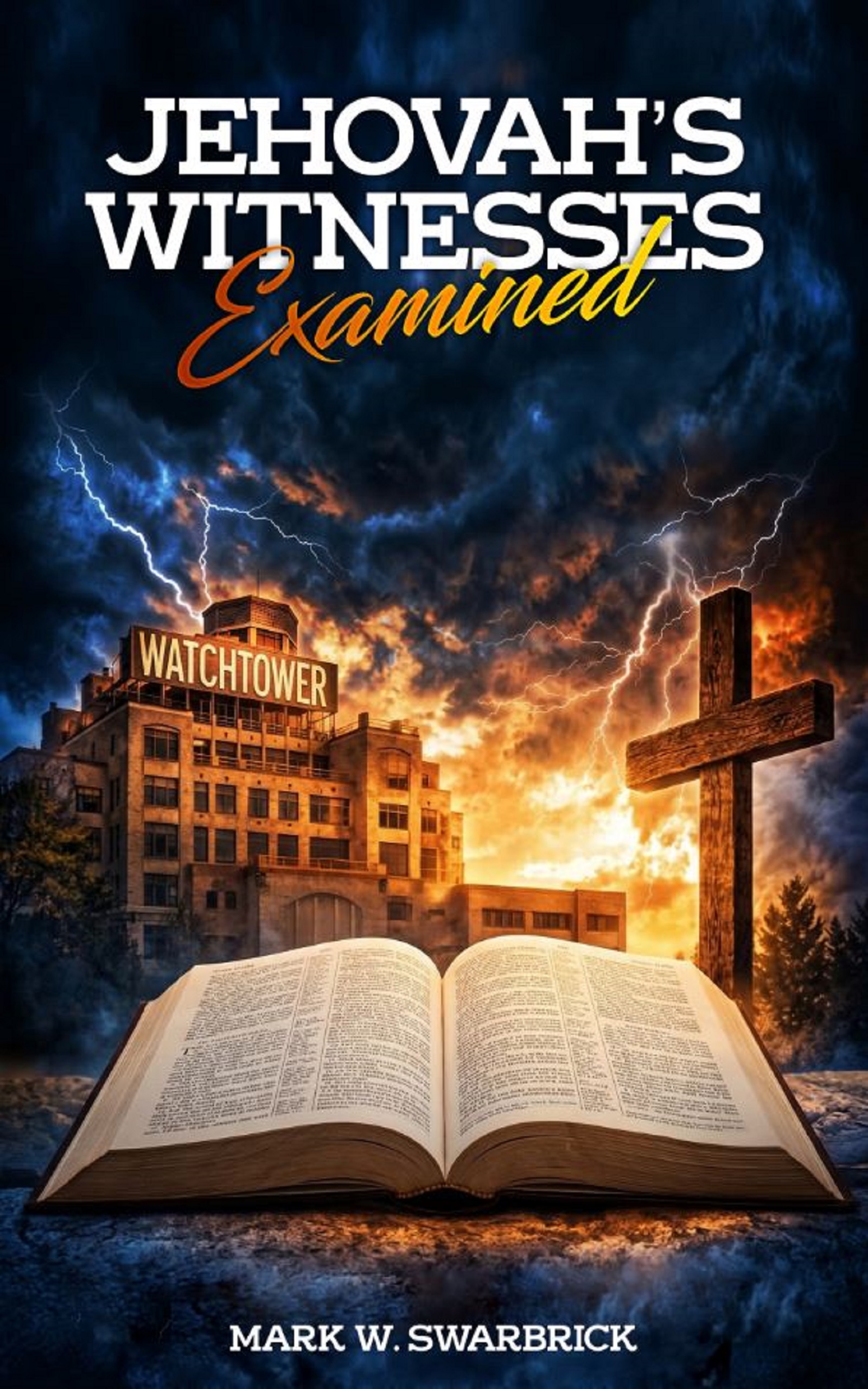 Jehovah's Witnesses Examined:
In Jehovah’s Witnesses Examined, author Mark W. Swarbrick carefully compares the doctrines of the Watchtower organization with the clear teaching of the Bible. This concise and readable book exposes the movement’s history, its controlling structure, and the serious doctrinal errors that separate it from historic Christianity.
Available in Paperback, Kindle eBook, and Audio Book. Only $4.99 – Click
HERE
to purchase at Amazon.
Jehovah's Witnesses Examined:
In Jehovah’s Witnesses Examined, author Mark W. Swarbrick carefully compares the doctrines of the Watchtower organization with the clear teaching of the Bible. This concise and readable book exposes the movement’s history, its controlling structure, and the serious doctrinal errors that separate it from historic Christianity.
Available in Paperback, Kindle eBook, and Audio Book. Only $4.99 – Click
HERE
to purchase at Amazon.
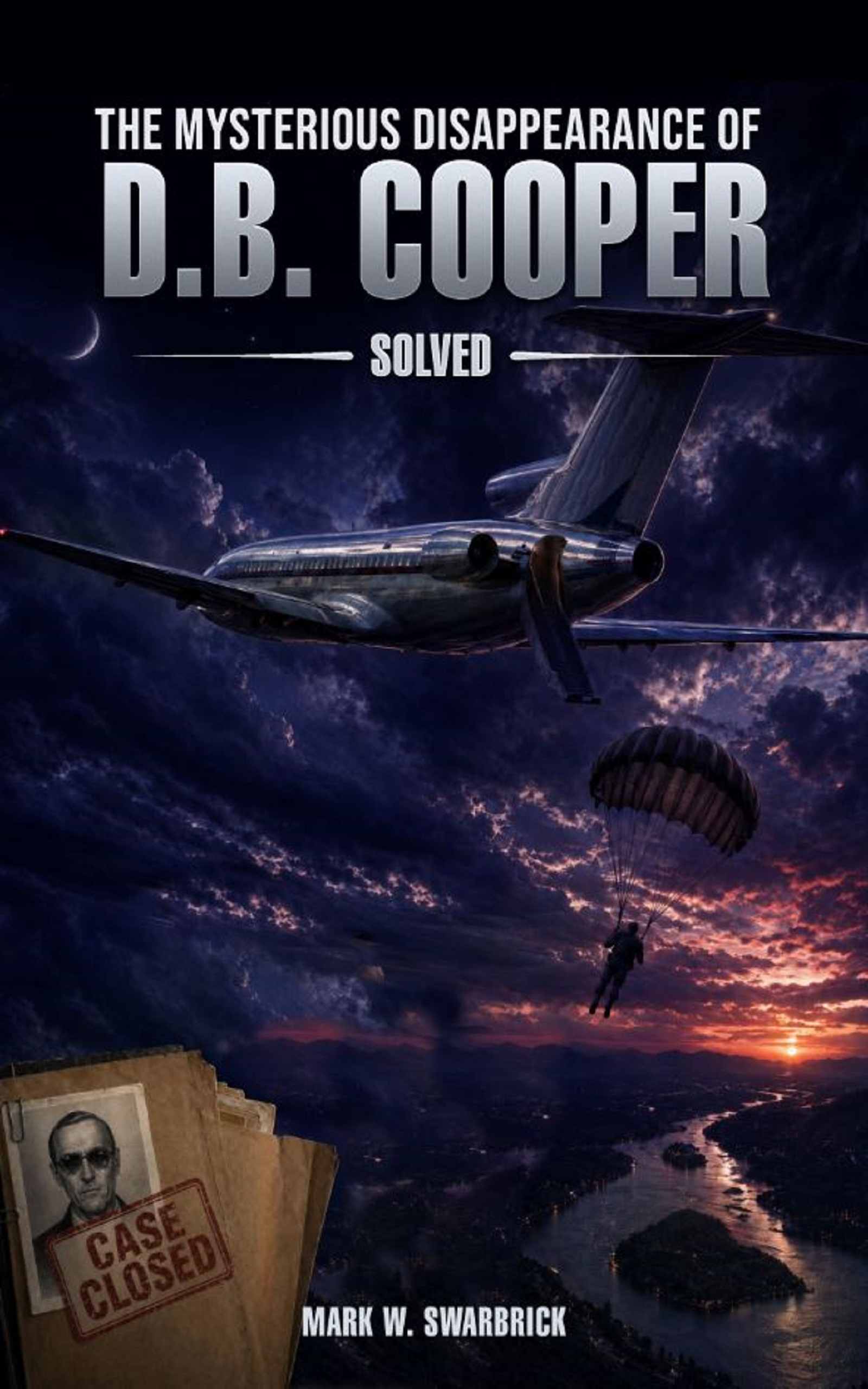 The Mysterious Disappearance of D.B. Cooper Solved.
In The Mysterious Disappearance of D.B. Cooper - Solved, Mark Swarbrick cuts through decades of speculation to present a clear, evidence-based case identifying the man behind the crime.
Available in Paperback, Kindle eBook, and Audio Book. Only $3.99 – Click
HERE
to purchase at Amazon.
The Mysterious Disappearance of D.B. Cooper Solved.
In The Mysterious Disappearance of D.B. Cooper - Solved, Mark Swarbrick cuts through decades of speculation to present a clear, evidence-based case identifying the man behind the crime.
Available in Paperback, Kindle eBook, and Audio Book. Only $3.99 – Click
HERE
to purchase at Amazon.
 Killing Cancer: Exploring Non-Conventional Therapies and Emerging Science in Oncology.
In Killing Cancer, Mark Swarbrick dives deep into more than two dozen alternative and integrative approaches that patients and researchers around the world are exploring. Drawing from scientific studies, clinical observations, and compelling anecdotal reports, this book examines therapies that range from repurposed drugs like ivermectin and fenbendazole, to natural compounds like curcumin, artemisinin, Turkey Tail mushroom (PSK & PSP), high-dose vitamins D3 & K2, red light therapy, and ketogenic or fasting-based diets.
Available in Paperback, Kindle eBook, and Audio Book. Only $3.99 – Click
HERE
to purchase at Amazon.
Killing Cancer: Exploring Non-Conventional Therapies and Emerging Science in Oncology.
In Killing Cancer, Mark Swarbrick dives deep into more than two dozen alternative and integrative approaches that patients and researchers around the world are exploring. Drawing from scientific studies, clinical observations, and compelling anecdotal reports, this book examines therapies that range from repurposed drugs like ivermectin and fenbendazole, to natural compounds like curcumin, artemisinin, Turkey Tail mushroom (PSK & PSP), high-dose vitamins D3 & K2, red light therapy, and ketogenic or fasting-based diets.
Available in Paperback, Kindle eBook, and Audio Book. Only $3.99 – Click
HERE
to purchase at Amazon.
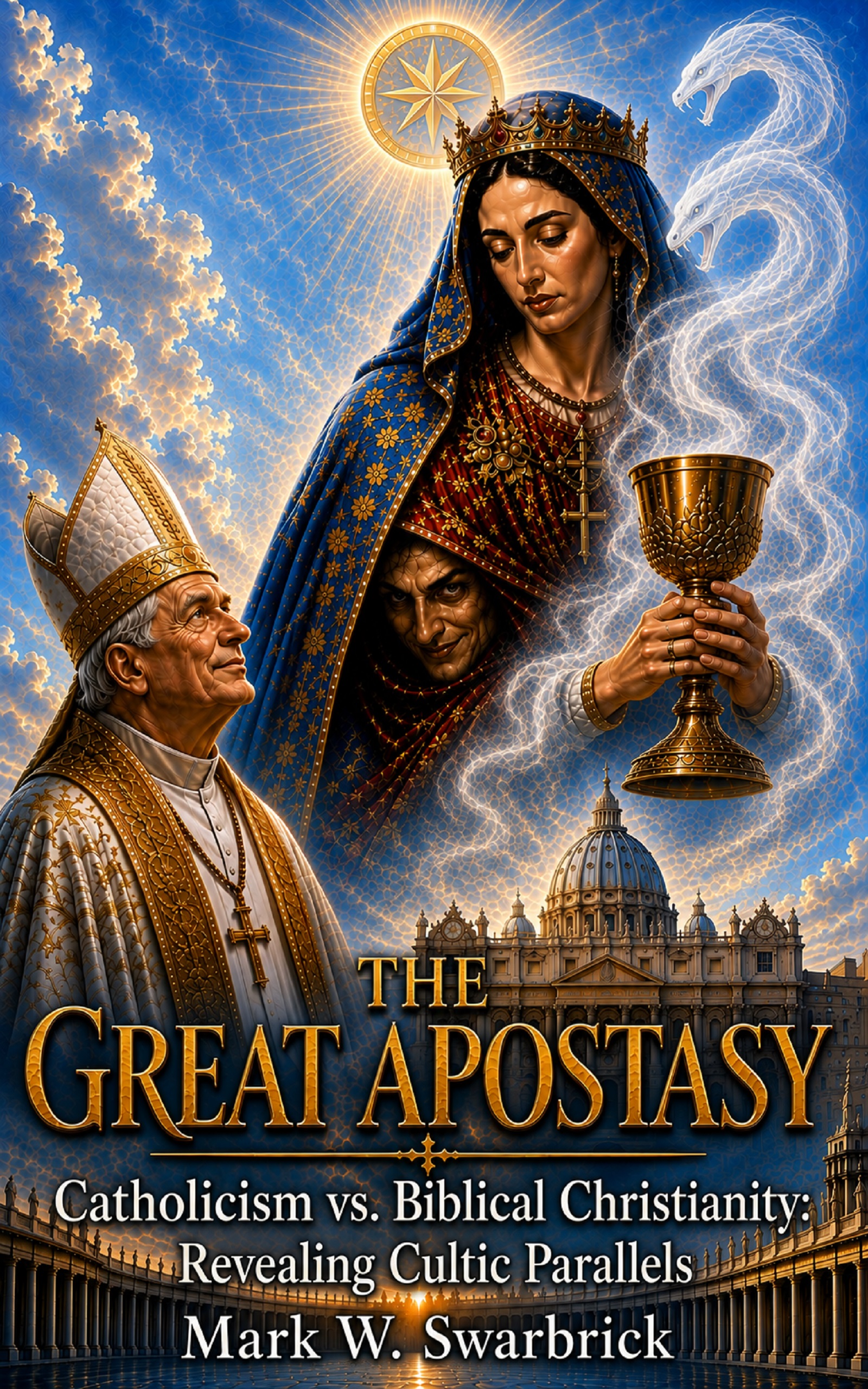 The Great Apostasy - Catholicism vs. Biblical Christianity: Revealing Cultic Parallels.
Author Mark Swarbrick’s definitive work on Catholicism examines the papacy, Mary, purgatory, the priesthood, salvation by works, transubstantiation, confession, tradition, religious persecution, and much more. Doctrine by doctrine, he compares the teachings of Rome with Scripture and builds the case that Catholicism bears the defining marks of a non-Christian cult. Then, turning to history and Bible prophecy, Swarbrick presents the provocative case that Roman Catholicism is more than a cult: It is the great apostasy foretold in Scripture. This book challenges Catholics and Protestants alike to set aside tradition, examine the evidence, and judge for themselves.
Available in Paperback, Hardback, Kindle eBook, and Audio Book. Only $6.99 – Click
HERE
to purchase at Amazon.
The Great Apostasy - Catholicism vs. Biblical Christianity: Revealing Cultic Parallels.
Author Mark Swarbrick’s definitive work on Catholicism examines the papacy, Mary, purgatory, the priesthood, salvation by works, transubstantiation, confession, tradition, religious persecution, and much more. Doctrine by doctrine, he compares the teachings of Rome with Scripture and builds the case that Catholicism bears the defining marks of a non-Christian cult. Then, turning to history and Bible prophecy, Swarbrick presents the provocative case that Roman Catholicism is more than a cult: It is the great apostasy foretold in Scripture. This book challenges Catholics and Protestants alike to set aside tradition, examine the evidence, and judge for themselves.
Available in Paperback, Hardback, Kindle eBook, and Audio Book. Only $6.99 – Click
HERE
to purchase at Amazon.
 The Statin Lie: Why Cholesterol is not the Problem and Statins are not the Solution.
If you take a statin or have been told you need one, you deserve to hear the other side of the story. In The Statin Lie author Mark Swarbrick examines how cholesterol became the villain, how statistics can make modest statin benefits appear enormous, the side effects associated with these drugs, and the billions of dollars behind the statin industry.
Available in Paperback, Kindle eBook, and Audio Book. Only $4.99 – Click
HERE
to purchase at Amazon.
The Statin Lie: Why Cholesterol is not the Problem and Statins are not the Solution.
If you take a statin or have been told you need one, you deserve to hear the other side of the story. In The Statin Lie author Mark Swarbrick examines how cholesterol became the villain, how statistics can make modest statin benefits appear enormous, the side effects associated with these drugs, and the billions of dollars behind the statin industry.
Available in Paperback, Kindle eBook, and Audio Book. Only $4.99 – Click
HERE
to purchase at Amazon.
