Can you lose salvation after you have genuinely been saved? The doctrine commonly called “Once Saved Always Saved,” or Eternal Security, says no. It teaches that once a person is truly saved, his eternal destiny is permanently settled, even if he later falls into serious sin, abandons the faith, or rejects Christ. It is certainly a comforting doctrine, but is Once Saved Always Saved biblical?
Does the Bible Teach Once Saved Always Saved?
Scripture unquestionably teaches that salvation is by grace through faith. We cannot earn it, deserve it, or purchase it through good works. But the Bible also repeatedly warns believers that they must continue in faith. Paul told the Colossian believers that Christ would present them “holy and blameless and beyond reproach”:
“if indeed you continue in the faith firmly grounded and steadfast, and not moved away from the hope of the gospel” (Colossians 1:23 LSB).
That little word “if” creates an enormous problem for Once Saved Always Saved. If final salvation is absolutely guaranteed from the instant someone believes, regardless of what happens afterward, why does Paul make continuing in the faith a condition?
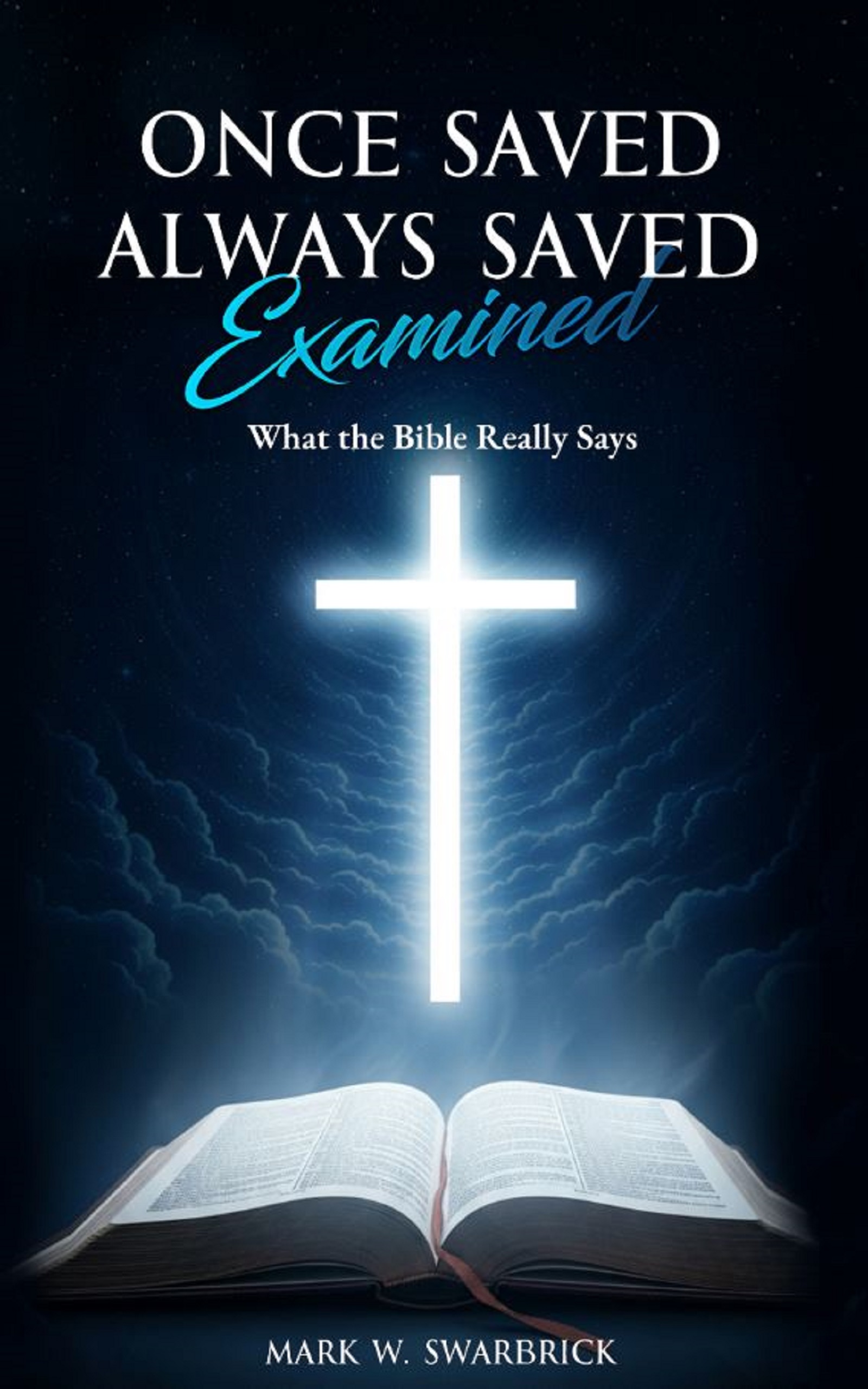
Once Saved Always Saved Examined: What the Bible Really Says
Does the Bible teach that you can never lose your salvation? In Once Saved Always Saved Examined, Pastor Mark Swarbrick carefully guides the reader through the pertinent passages of Scripture, examining both the promises of security and the warnings about falling away. This book will prepare you to know and understand what the Bible really says about Once Saved Always Saved.
Available in Paperback, Kindle eBook, and Audio Book. Only $3.99.
Paul gives an even more startling warning in Romans 11. Speaking to those who presently “stand by faith,” he warns them about what happened to those who fell through unbelief:
“Behold then the kindness and severity of God; to those who fell, severity, but to you, God’s kindness, if you continue in His kindness; otherwise you also will be cut off” (Romans 11:22 LSB).
Notice what Paul does not say. He does not tell them that because they presently stand by faith, being cut off is impossible. He warns them of precisely the opposite. They stand by faith, but if they do not continue, they too can be cut off.
Can a Christian Fall Away From the Faith?
Jesus used similar language in John 15. He described Himself as the vine and His followers as branches. Yet He warned:
“If anyone does not abide in Me, he is thrown away as a branch and dries up; and they gather them, and cast them into the fire and they are burned” (John 15:6 LSB).
The branch Jesus describes must “abide in Me.” The warning makes little sense if separation from Christ is impossible. Why repeatedly command believers to remain in Christ if remaining in Christ is automatic?
Hebrews is even more explicit:
“See to it, brothers, that there not be in any one of you an evil, unbelieving heart that falls away from the living God” (Hebrews 3:12 LSB).
Who is being warned? “Brothers.” And what are they warned against? Falling away from the living God through unbelief. You cannot fall away from someone you were never with.
Backsliding Is Not Apostasy
This does not mean Christians lose their salvation every time they sin. Christians stumble, fail, and sometimes fall badly. Peter denied Christ three times and was restored. The issue is not ordinary human weakness followed by repentance. The issue is apostasy: abandoning faith in Christ, rejecting Him, and refusing to return.
Nor does rejecting Once Saved Always Saved mean that Christians must live terrified that they could accidentally lose their salvation. Our security is found in Christ. As long as we remain in Him through faith, we have every reason for confidence. The danger comes when assurance is detached from continuing faith and converted into a guarantee based entirely upon something that happened years ago.
This distinction is tremendously important because false assurance can be spiritually deadly. A person can walk an aisle at twelve years old, repeat a prayer, and then spend the next fifty years rejecting Christ while believing he is guaranteed heaven because someone told him, “Once saved, always saved.” Scripture never gives such a person that assurance.
The Bible gives us something far better than Once Saved Always Saved. It gives us genuine assurance in a living relationship with Jesus Christ. God is faithful. Christ is sufficient. His grace is more than sufficient to keep us. But Scripture repeatedly tells us to believe, abide, continue, persevere, and hold fast.
The question, therefore, is not merely, “Were you once saved?” The far more important question is: Are you still trusting and following Jesus Christ today?


 Global Warming: Socialism in Disguise