Do Catholics believe in sola scriptura? They do not. Catholicism places Sacred Tradition alongside Scripture as an authority for faith and practice, while Protestants hold to sola scriptura — the Bible alone — as the only infallible standard. This disagreement over sola scriptura vs tradition is one of the most important issues dividing Catholicism from biblical Christianity because it determines the authority by which every other doctrine is judged. When human tradition is elevated to the level of God’s Word, the result is man-made doctrines, extra-biblical rules, and false assurance. The question is simple: will we follow the traditions of men or the Word of God?
Sola Scriptura vs Tradition — The Core Catholic Debate
Every false religion adds something to Scripture. Mormons add the Book of Mormon, Jehovah’s Witnesses rely on Watchtower publications, and Christian Scientists elevate Mary Baker Eddy’s writings. The Catholic Church has done the same by claiming the pope is infallible and that church tradition is equal to Scripture. Yet Jesus directly warned against this. When challenged about His disciples ignoring ritual traditions, He replied:
“These people honor me with their lips, but their hearts are far from me. They worship me in vain; their teachings are but rules taught by men. You have let go of the commands of God and are holding on to the traditions of men.” (Mark 7:6–8)
Paul gave the same warning, saying that such rules “have the appearance of wisdom in self-made religion… but are of no value against fleshly indulgence” (Colossians 2:23). The Bible consistently teaches that man’s traditions cannot replace God’s truth.
Get The Great Apostasy – Pastor Mark’s 307 page definitive work on Catholicism!
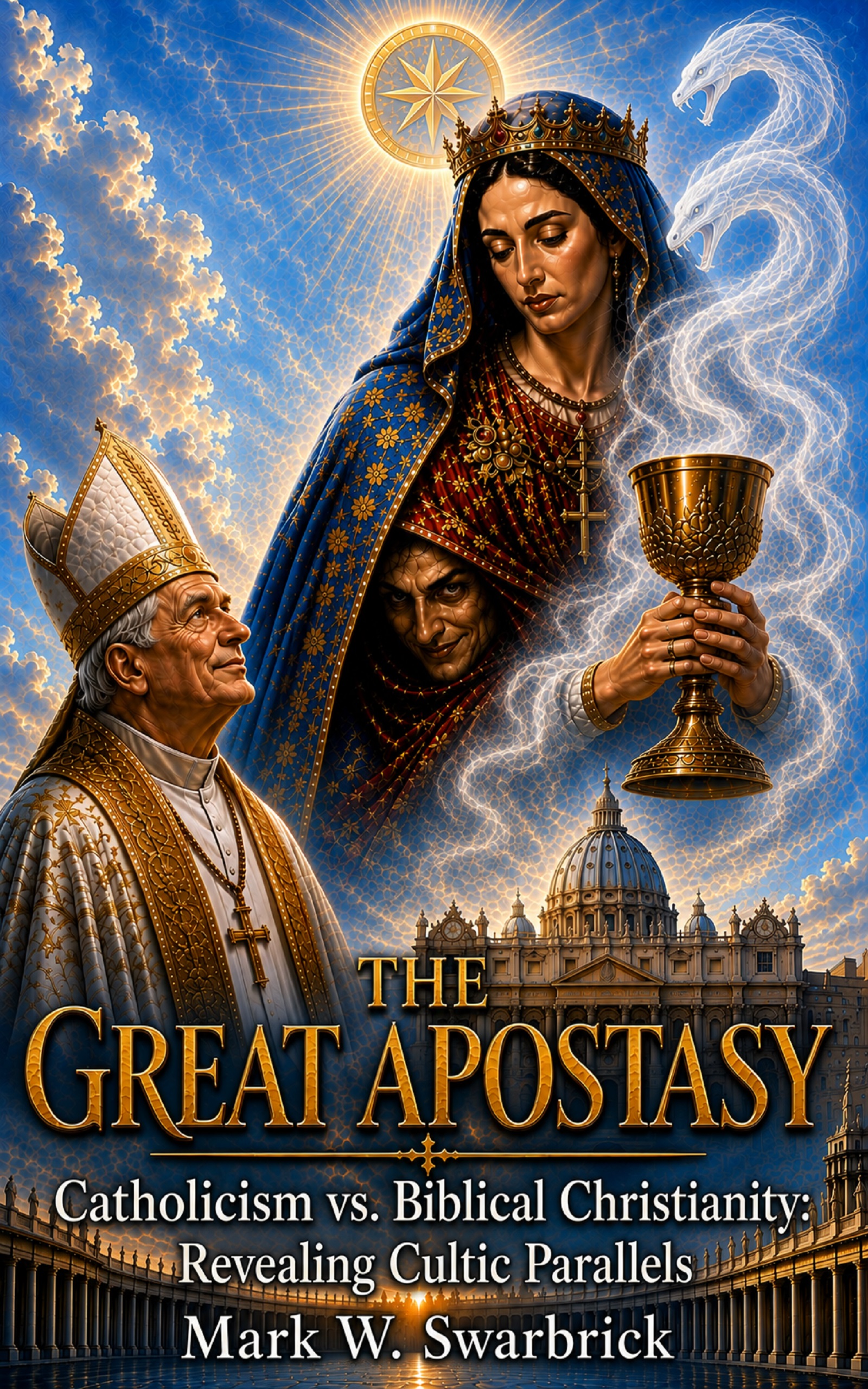
The Great Apostasy: Catholicism vs. Biblical Christianity
Drawing extensively from Catholicism’s own official writings, Swarbrick examines the papacy, Mary, purgatory, the priesthood, salvation by works, transubstantiation, confession, tradition, religious persecution, and much more. Doctrine by doctrine, he compares the teachings of Rome with Scripture and builds the case that Catholicism bears the defining marks of a non-Christian cult.
Available in Paperback, Hardback, Kindle eBook, and Audio Book. Only $4.99.
Buy Now on Amazon
Do Catholics Believe in Sola Scriptura?
Catholics do not believe in sola scriptura. The Reformers insisted on sola scriptura — the Bible alone as the final infallible rule of faith. Scripture contains everything necessary for salvation and holiness. This debate over tradition and Bible is at the heart of the divide: the apostles pointed believers back to the Word of God, never to human authority.
-
“See to it that no one takes you captive through hollow and deceptive philosophy, which depends on human tradition… rather than on Christ.” (Colossians 2:8)
-
“Even if we or an angel from heaven should preach a gospel other than the one we preached to you, let him be eternally condemned!” (Galatians 1:8)
-
“Do not add to His words or He will reprove you, and you will be proved a liar.” (Proverbs 30:6)
From beginning to end, the Bible rejects human tradition as a rival to God’s Word.
Scripture Alone: The Christian Standard
The Bereans examined the Scriptures daily to confirm Paul’s teaching (Acts 17:11). Jesus Himself resisted Satan by quoting Scripture: “It is written.” Again and again He asked, “Have you not read?” (Matthew 12:3, 19:4, 22:31). The phrase “It is written” appears 64 times in the New Testament, underscoring Scripture’s final authority. By contrast, Catholicism has elevated human traditions, rituals, and dogmas above God’s Word — the very error that Jesus condemned. The choice remains the same today: tradition and Bible cannot both be supreme. Only the Bible is sufficient, trustworthy, and inspired.
Jesus never based His teaching on the traditions of the Pharisees or on Jewish oral law. Instead, He consistently pointed to the authority of Scripture in the debate over tradition and Bible. When tempted in the wilderness, He answered Satan with “It is written” (Matthew 4:4, 7, 10). When cleansing the temple, He declared, “It is written, My house shall be called a house of prayer” (Matthew 21:13). To the Pharisees who opposed Him, He rebuked them with, “It is written, This people honors Me with their lips, but their heart is far from Me” (Mark 7:6). After His resurrection, He reminded His disciples, “Thus it is written, and thus it was necessary for the Christ to suffer and to rise from the dead the third day” (Luke 24:46). At every turn, Jesus appealed not to man-made tradition, but to the written Word of God. Never once did Jesus base His teaching on the traditions of men—He never said, “tradition says” or “the rabbis teach”—but always, “It is written.”
This same pattern is found throughout the New Testament. The apostles, following their Master, grounded their arguments in Scripture. Paul wrote, “It is written, There is none righteous, no, not one” (Romans 3:10), and again, “It is written, Vengeance is Mine, I will repay, says the Lord” (Romans 12:19). Peter also appealed to Scripture: “It is written, Be holy, for I am holy” (1 Peter 1:16).
In total, the phrase “It is written” appears about 64 times in the New Testament. This repeated appeal to Scripture by Jesus and the apostles underscores a clear truth: divine authority rests not in tradition, councils, or human teachers, but in the written Word of God.
Even in the Garden of Gethsemane, Jesus demonstrated this submission to Scripture. Overcome with sorrow, He prayed, “My Father, if it is possible, let this cup pass from Me…” (Matthew 26:39). But then He added, “How then would the Scriptures be fulfilled that say it must happen in this way?” (Matthew 26:54). In His darkest hour, Jesus showed that even His own deliverance could not set aside the written Word. Scripture had foretold His suffering, and Scripture could not be broken. This makes the contrast unmistakable: when weighing tradition and Bible, Jesus and the apostles always upheld the authority of Scripture alone.
Jesus condemned the Pharisees for elevating human rules above God’s commands, saying, “You have let go of the commandment of God and hold to the tradition of men” (Mark 7:8), and again, “You nullify the word of God by your tradition” (Mark 7:13). In the same way, Catholicism upholds its traditions even when they contradict Scripture. By relying on the teachings of men rather than the authority of God’s Word, it repeats the very error that Jesus so sharply denounced.
Return to the Catholicism Hub Page
Return to Home Page

The Hidden Truth About Catholicism — If you are a Catholic, or if you know someone who is, this book is for you. With loving respect, Pastor Mark Swarbrick uncovers the false doctrines of Rome while giving a clear account of the history of Catholicism and an in-depth analysis of its teachings in light of Scripture.
Available in Paperback, Kindle eBook, and Audio Book. Only $2.99.


 Global Warming: Socialism in Disguise